
Fiber Cement Siding Costs and Installation in Berlin, MA

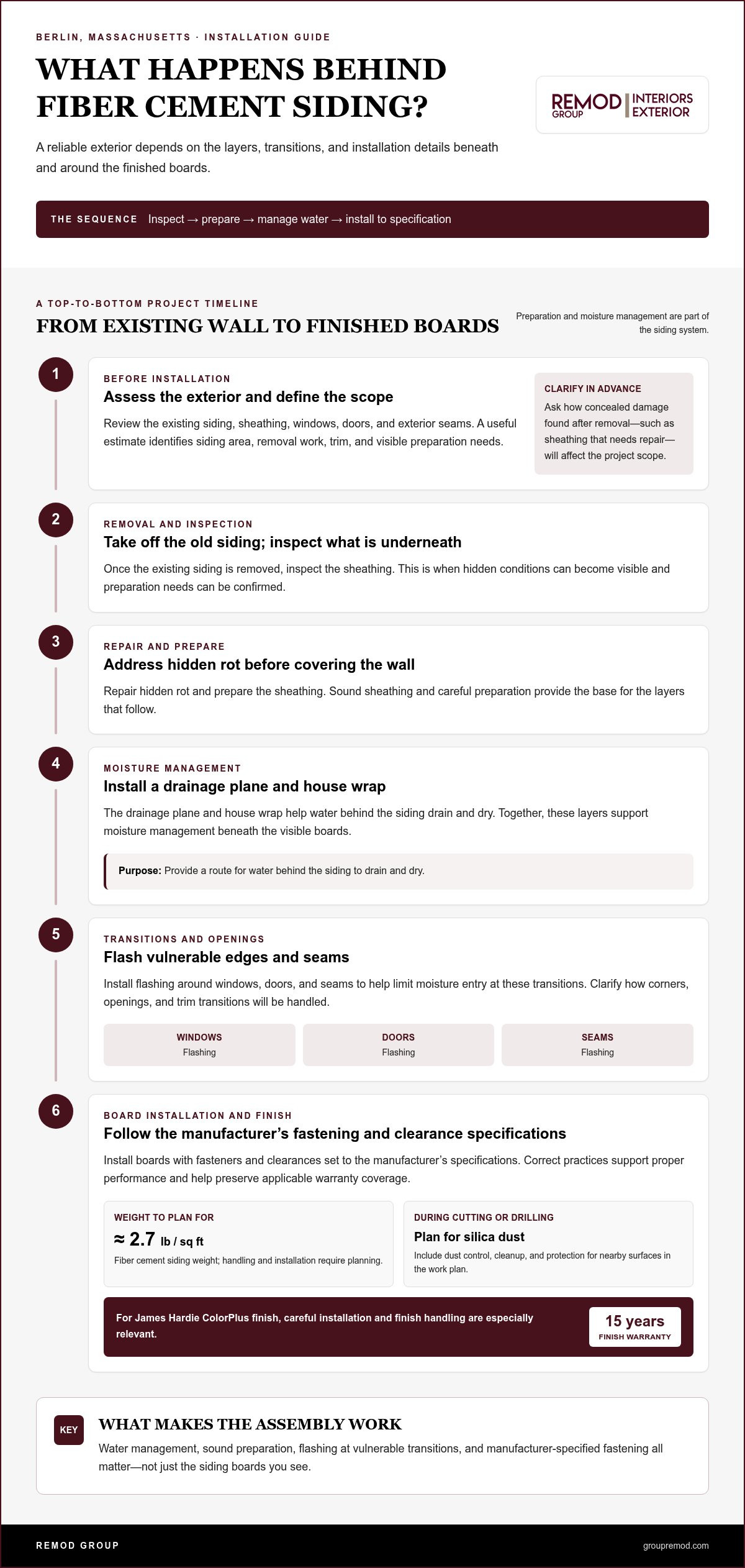
Fiber cement siding in Berlin, MA, depends on more than the boards you see: the installation behind them matters just as much. A sound assembly uses house wrap to help water drain and dry, flashing around windows, doors, and seams to limit moisture intrusion, and fasteners and clearances set to the manufacturer’s specifications.
That attention to detail matters in Massachusetts weather, where moisture protection and careful preparation help support a durable exterior. The material choice matters, but so does what happens beneath and around it.
This guide explains what shapes a fiber cement siding project’s cost, what installation involves, and how the material performs in local conditions. You’ll also learn which preparation details support the finished siding and what to consider when planning an exterior upgrade, so you can make a clear, informed decision for your home.
Table of Contents
What About the Installation Behind the Siding?
Fiber cement installation in Berlin, MA, depends on the layers behind the finished boards. House wrap, flashing, sound sheathing, and correct fastening all help manage moisture.
Estimates and Pre-Install Inspections
A useful estimate describes the siding area, removal work, trim, and visible preparation needs. During a pre-installation inspection, the crew assesses the existing siding, sheathing, windows, doors, and exterior seams. These details help identify conditions that could change the project scope. For a Berlin home, ask how the estimate accounts for concealed damage discovered after removal, such as sheathing that needs repair.
Installation Weight and Silica Dust
Fiber cement siding weighs approximately 2.7 pounds per square foot, so handling and installation require planning. Cutting or drilling also calls for attention to silica dust, including dust control and cleanup in the work plan. Ask how the crew will manage cutting areas and protect nearby surfaces. These steps matter during installation, not just after the boards are in place.
A sound process starts by removing the old siding and inspecting the sheathing. The crew repairs hidden rot, then installs a drainage plane and house wrap, giving water behind the siding a route to drain and dry. Flashing around windows, doors, and seams helps limit moisture entry at vulnerable transitions.
Next, the contractor installs boards with fasteners and clearances that follow the manufacturer’s specifications. Those details support proper performance and help preserve applicable warranty coverage. A contractor serving Berlin should be familiar with the manufacturer’s installation guidance. Contractor Alliance training is useful only when it translates into consistent field practices, from layout to fastening.
Before work begins, clarify how the installation handles corners, openings, and trim transitions. James Hardie ColorPlus finish carries a 15-year finish warranty, making careful installation and finish handling especially relevant. Fiber cement’s weight, the condition of the sheathing, and moisture management all belong in the project plan, alongside the visible choice between fiber cement and vinyl siding.
Massachusetts siding project cost estimates
In Massachusetts, an estimate depends on the home’s siding area, material, and preparation needs. A typical single-family replacement in Berlin takes 1-2 weeks.
For fiber cement siding in Berlin, MA, start with a site assessment and written scope. These should connect the selected material and exterior work to your home’s actual conditions.
Estimates and Project Timelines
A detailed estimate separates siding installation from removal, trim, and repairs that may emerge during preparation. The final price depends on the home’s dimensions, chosen product, access, and sheathing condition, and is provided after a quote request. Compare scopes, not just totals: a line for James Hardie or other Hardie fiber cement should identify the material and explain what work the estimate includes.
Timeline planning also depends on the scope. A typical Berlin single-family replacement takes 1-2 weeks, while concealed repairs or added exterior work can affect the schedule. Ask how the proposed sequence accounts for removal, preparation, installation, and finishing. Review product warranty information alongside the installation scope, since specified installation practices matter.
Nearby Fiber Cement Siding Project
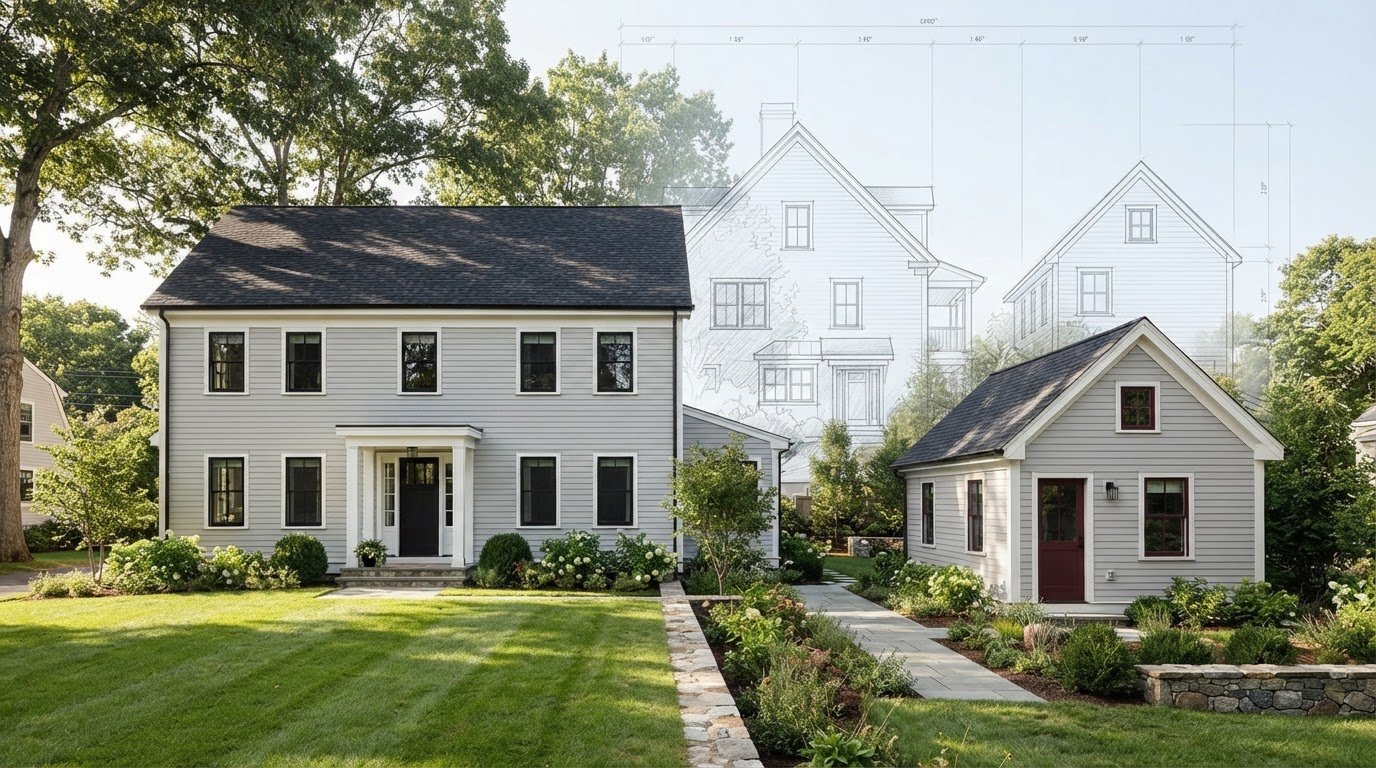
A photographed carriage house fiber-cement siding project is in Marlborough, 5 miles southeast of Berlin. It offers a nearby example of how siding can shape an outbuilding’s appearance, distinct from a full single-family replacement. Consider its setting, proportions, and trim details as visual reference points, rather than treating the project as a direct estimate for another home.
Project photos can help clarify your preferences before an estimate: lap siding, panel lines, and trim create different visual effects. Let the home’s architecture and existing exterior details guide those choices. In New England, preparation and installation scope matter to planning, not just the finished color or appearance.
For a useful quote request, gather exterior photos and note visible damage, the existing siding type, and your preferred finish. These details help frame an assessment, while a site visit establishes the project scope. Keep material choices separate from repair needs so each part is clear.
Review the estimate for removal, disposal, trim, and surface preparation. These factors shape the work and final price. A written timeline should make the planned phases easy to understand, from initial removal through completed siding.
Siding materials available in Berlin
Berlin homes can use fiber cement, vinyl, cedar, or engineered wood siding. For full siding replacement, a permit is pulled where the town requires one.
Siding Material Costs and Lifespans
Material choice affects upkeep and expected service life. Fiber cement can last 40-75 years, while vinyl siding is estimated at 20-30 years in Massachusetts. Cedar siding is estimated at 20-40 years when maintained; engineered wood, 25-35 years. Fiber cement repainting is generally needed every 15-20 years, so include future finish care in your comparison.
Costs by Siding Material
The price depends on the project and is provided after a quote request. Siding area, material, existing wall condition, removal, and trim all shape the scope. Cedar is labor-intensive and costs more than vinyl and fiber cement. Compare estimates by the work included, not material labels alone: preparation and repairs can affect the total as much as the visible finish.
Material composition also informs the decision. James Hardie fiber cement combines cement, sand, and cellulose fibers. Vinyl is a different option, while cedar offers a natural wood surface. In colder climates, vinyl can become brittle below approximately 20°F and crack from direct impact. Consider the home’s exposure and the maintenance each material requires.
Fiber Cement Brands for New England Homes
James Hardie is a fiber cement manufacturer to consider for New England homes. Its products include HardiePlank lap siding, Hardie Shingle with a cedar-shingle appearance, and HardiePanel for a vertical board-and-batten look. Choose based on the home’s architecture, desired profile, and manufacturer installation requirements, rather than assuming one style suits every exterior.
For color and form, compare samples against the home’s trim and roof. HardiePlank exposure widths include 5.25, 6.25, 7.25, and 8.25 inches. HardiePanel is available in 4′ x 8′ or 4′ x 10′ panels. These distinctions affect the finished appearance and layout of siding installation. In Berlin’s climate, weigh visual preferences alongside durability and ongoing finish care.
Fiber cement siding performance in Massachusetts weather
Massachusetts weather tests siding through wind, rain, and seasonal temperature changes. James Hardie siding is stated to handle winds up to 150 miles per hour, a notable performance figure for homeowners evaluating an exposed exterior. It isn’t a substitute for correct installation: fastening, clearances, and the wall assembly still affect how the finished siding performs.
Moisture management remains central. Fiber cement’s resistance to rot does not mean water can be ignored around joints, windows, doors, or roof edges. Flashing and drainage details protect vulnerable transitions, while prompt attention to damaged caulk helps keep water from reaching the wall beneath. Even a suitable material needs a sound water-management plan.
Fire resistance is another consideration. James Hardie fiber cement siding is described as fire-resistant, with a Flame Spread Index of 0 and Smoke Developed Index of 0. Those figures describe the siding’s listed indices, not a guarantee that an entire home is fireproof. Homeowners should consider the complete exterior assembly, not one material in isolation.
Energy performance also deserves attention in a colder climate. Fiber cement may be less energy efficient than other siding types, so homeowners can consider foam insulation as part of an exterior upgrade. That choice depends on the wall assembly and project scope. Discussing insulation alongside siding connects material selection with the home’s broader performance goals.
Appearance can complement practical needs. Hardie products include lap profiles and a cedar shingle look, letting homeowners coordinate siding with the home’s architectural character. James Hardie ColorPlus finish carries a 15-year finish warranty. Review the finish and installation requirements together, since product selection and handling are linked.
Plan the project timeline around both the visible work and the exterior details that support performance. Ask for a scope that identifies preparation, transitions, and finish work. This makes it easier to compare the material’s appearance with the installation plan, rather than judging siding by color alone.
For a weather-conscious exterior upgrade, discuss professional siding installation for your home.
Remod Group: Deck Construction
Remod Group’s siding installation service helps homeowners turn siding decisions into a coordinated exterior project. If the siding project also prompts a closer look at an aging or unfinished deck, Remod Group offers deck construction to improve the home’s outdoor spaces.
Consider siding when the exterior needs renewed protection or a different finish. Deck construction may be relevant when an outdoor structure no longer suits how you use the property. For homeowners planning several improvements, Remod Group also offers kitchen and bathroom remodeling as part of its broader remodeling work.
Bring your project priorities together before deciding what to tackle first. Remod Group can help with relevant remodeling work. Visit groupremod.com to discuss your project.
Shape Your Next Exterior Project
A lasting exterior begins with choices that fit the home, not just the material sample. Before moving forward with fiber cement siding in Berlin, MA, consider how the new finish will complement the roof, trim, and surrounding architecture. Then set your priorities: appearance, maintenance, or coordinating siding work with other improvements.
A clear project brief can make the next conversation more productive. Note which areas need attention, how you want the finished exterior to look and feel, and whether you’re planning related renovation work. These choices help turn an initial idea into a practical scope without losing sight of the home’s character.
Remod Group can help you explore the right next step for your home. Contact Remod Group to discuss your project and begin shaping a considered plan. A thoughtful start can bring greater clarity to the work ahead.
Frequently Asked Questions
What does fiber cement siding installation cost in Berlin, Massachusetts?
The price depends on the home and project scope. Siding area, chosen profile and finish, removal, trim, access, and repairs all affect the estimate. For a Berlin home, note the existing siding type and visible exterior damage before requesting a quote. Those details help frame the work for an on-site assessment.
How much does fiber cement siding cost per square foot in Massachusetts?
There isn’t one per-square-foot figure that fits every Massachusetts home; the estimate depends on project conditions and selected materials. Wall layout, trim details, removal, and repairs can change the labor and materials involved. Compare written scopes that describe the same work, rather than relying on a rate alone. Request a quote for project-specific pricing.
How do fiber cement and vinyl siding compare in cost and durability in Massachusetts?
Fiber cement and vinyl differ in material, finish options, and expected care, so compare the full project scope alongside the products. Consider how each option suits the home’s architecture and the amount of finish upkeep you prefer. Ask whether estimates include comparable trim, removal, and preparation. This makes the cost comparison more useful than comparing material names alone.
What is the fiber cement siding installation process and timeline?
Installation typically moves from removing existing siding to preparing the wall, fitting the new boards, and completing trim and finish details. The schedule depends on the home’s size, access, weather, and any repairs found during preparation. For a Berlin project, clarify the planned work sequence and how scope changes affect scheduling. This helps you plan around crew activity and exterior access.
How do you maintain fiber cement siding, and what about lifespan and warranty?
Clean James Hardie fiber cement siding with soap and water, avoid harsh cleaners and abrasive brushes, and inspect caulking for areas needing attention. Recaulk as needed to help protect joints and transitions. Keep product warranty details with your project records, and distinguish finish coverage from other warranty terms. A simple inspection routine can help you spot maintenance needs early.
Can fiber cement siding have problems in cold, wet New England climates?
Cold, wet conditions make water management and installation details especially important. Moisture trapped behind siding can affect the wall assembly, so drainage, flashing, and sound joints matter. In colder climates, consider insulation choices too, because fiber cement may be less energy efficient than some alternatives. Review the whole exterior assembly, including openings and trim, rather than judging performance by the siding alone.
Comments