
Best Roofing Materials for New England Winters

The roof that looks most durable isn’t automatically the best choice for a New England winter. Choosing roofing materials for cold climate conditions means weighing how each option handles snow, ice, and repeated freeze-thaw cycles. The visible surface is only part of the decision.
It’s natural to compare asphalt shingles, metal, slate, or cedar by how well they appear to withstand harsh weather. But even a durable material can’t compensate for a roof system that doesn’t manage moisture, insulation, ventilation, and vulnerable areas such as eaves and valleys. Ice dams, in particular, involve more than the roofing material alone.
This guide compares common residential roofing materials and their practical tradeoffs. It also explains system details that influence winter performance, from underlayment and flashing to attic conditions. With a clearer picture of the material and the full roof assembly, you’ll be better prepared to plan a roof replacement in Massachusetts or elsewhere in New England.
Table of Contents
How Massachusetts Winters Challenge Roofing Materials
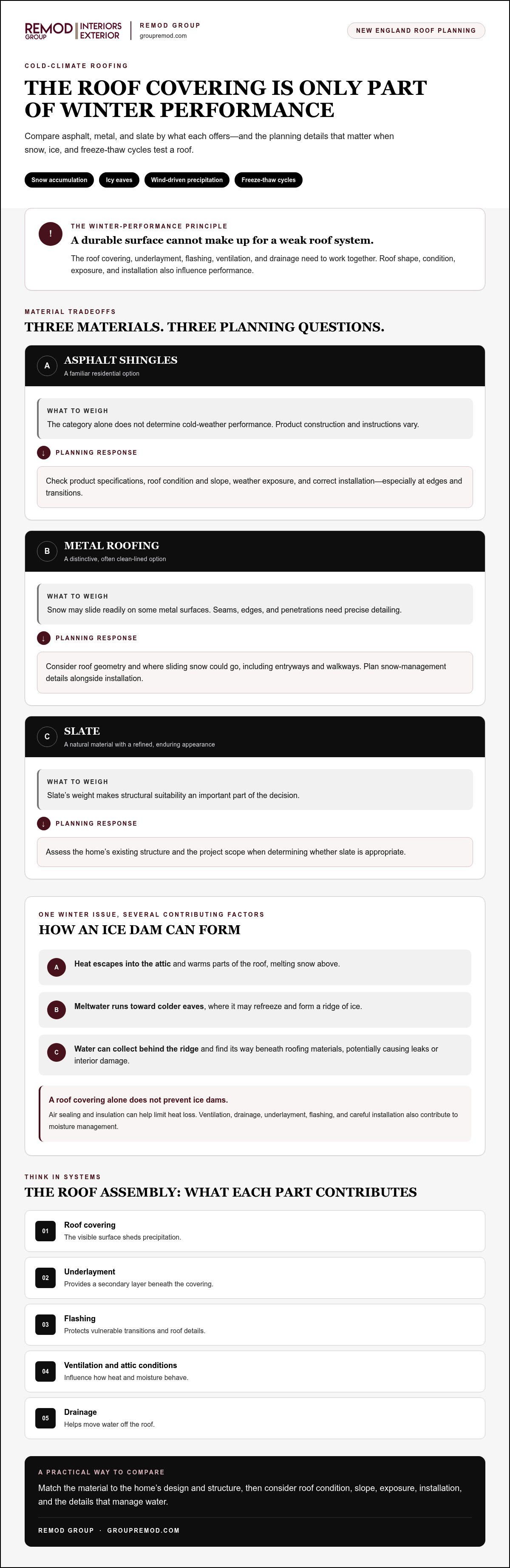
Cold-climate roofing isn’t a single material or product label. It’s a coordinated system: the roof covering, underlayment, flashing, ventilation, and drainage must work together through seasonal weather. Snow can accumulate on a roof, wind can drive precipitation beneath vulnerable edges, and repeated thawing and refreezing can test materials and the details where roof sections meet.
Roof performance depends on both the material and the quality of the system beneath and around it. A durable surface matters, but it can’t make up for poorly managed moisture, weak flashing details, or inadequate ventilation. Start by considering your roof’s shape, condition, and exposure before comparing roofing materials for cold climate conditions.
What winter conditions matter most for Massachusetts roofs?
Massachusetts homes can face snow cover, icy eaves, wind-driven rain or snow, and temperature swings that shift precipitation between frozen and liquid forms. The effect varies by property. Roof slope and shape influence where snow collects and how water drains. Wind exposure and nearby trees can affect how precipitation reaches the roof and whether debris obstructs drainage.
Look at the whole roof, not just its broad, visible surfaces. Valleys, eaves, edges, and transitions between roof sections can be especially important because they shape how water moves off the home. For background on shingle types and their construction, see Roof shingle.
How do ice dams and freeze-thaw cycles affect a roof?
An ice dam is different from ordinary snow cover. It can form when heat escaping into the attic warms parts of the roof and melts snow above. Meltwater flows toward colder eaves, where it may refreeze and create a ridge of ice. Water can then collect behind that ridge and find its way beneath roofing materials, potentially causing leaks or interior damage.
Ice dams aren’t prevented by choosing a particular roof covering alone. Air sealing and insulation can help limit heat loss, while ventilation, drainage, underlayment, flashing, and careful installation all contribute to how the roof manages moisture. Repeated freezing and thawing can also stress roof materials and joints, especially where water lingers or enters small gaps.
Ceiling stains, damp areas near exterior walls, or visible ice buildup may signal a problem, but they don’t reveal its underlying cause. A professional roof assessment can help distinguish a surface issue from concerns involving the roof assembly or attic conditions, informing a repair or replacement plan.
Cold-Climate Roofing Materials Compared: Asphalt, Metal, and Slate
No single roof covering is right for every New England home. The best fit depends on the specific product, roof design, exposure, installation, and manufacturer guidance. Compare materials as part of a complete roof plan, not as stand-alone promises of winter performance.
Asphalt shingles: A familiar residential option available in a broad range of appearances. Suitability depends on the product’s specifications, roof condition, slope, exposure, and correct installation. Check product instructions and the condition of the roof assembly to set realistic expectations.
Metal roofing: A distinctive, often clean-lined roof-covering option. Snow may slide readily on some metal surfaces, so roof geometry, entryways, walkways, and snow-management details deserve careful consideration. Seams, edges, and penetrations also require precise detailing.
Slate: A natural roofing material with a refined, enduring appearance. Its weight makes structural suitability an important part of planning. The home’s existing structure and project scope should inform whether slate is appropriate.
Are asphalt shingles suitable for cold and snowy weather?
Asphalt shingles are common on residential roofs, but the category alone doesn’t determine cold-weather performance. Product construction and installation instructions vary. Roof slope, exposure to wind and weather, existing roof condition, and the quality of details at edges and transitions all affect suitability. The National Weather Service’s explanation of ice dam formation also reinforces why a shingle choice alone can’t address every winter-related risk.
Can metal or slate roofing work well in New England?
Both can be considered, but each brings different planning needs. Metal’s smooth surface can influence how snow moves off the roof, while slate’s weight calls for attention to structural capacity. Appearance matters too: the roof should complement the home’s architecture as well as meet practical project requirements. Neither material is automatically the right choice for every property.
Comparison in brief: Asphalt offers familiar versatility, metal brings distinct detailing and snow-management considerations, and slate combines a natural aesthetic with added structural demands. The material describes the surface; the whole roof system determines how that surface performs.
For homeowners weighing these tradeoffs as part of a Massachusetts roof replacement, Remod Group’s residential roofing services can help bring material selection into the planning of a complete project.
Importance of Proper Roof Installation and Ventilation
A roof’s winter performance comes from how its parts work together. The visible covering sheds precipitation, underlayment provides a secondary layer beneath it, flashing protects vulnerable transitions, and drainage helps move water off the roof. Ventilation and attic conditions also affect how heat and moisture behave. A premium material can’t compensate for gaps in this system.
Ice-and-water protection and other installation details must follow applicable building codes and suit the roof’s design and conditions. Requirements can vary by location and project, so don’t assume one detail or coverage approach fits every Massachusetts home. Good planning accounts for the material, roof shape, exposure, and layers beneath the surface.
What do underlayment and flashing contribute in winter?
Underlayment sits between the roof deck and the outer covering, helping protect the deck if water gets past the surface. Flashing directs water away from joints and penetrations, such as where a roof meets a wall or chimney. These details matter because seams and transitions can create pathways for water. Their design and installation should suit the roof assembly, material, and applicable code requirements.
How do ventilation and attic conditions affect roof performance?
Balanced attic airflow can help manage temperature and moisture, but ventilation isn’t a cure-all. Heat escaping from living spaces can warm portions of the roof and contribute to snowmelt, while air leakage, insulation levels, and cold eaves influence how moisture behaves. Building Science Corporation’s roof-design guidance explains how roof design and ventilation relate to climate and ice-dam risk.
Upgrading the roof covering alone won’t correct attic heat loss or inadequate ventilation. Insulation, air sealing, ventilation, drainage, and roof condition should be considered together. A ceiling stain or recurring ice at an eave may point to a problem, but the visible symptom doesn’t establish its cause.
For a roof replacement, assess the complete assembly before settling on roofing materials for cold climate conditions. A professional roof assessment can help identify how the covering, underlayment, flashing, and attic conditions fit together. This makes it easier to compare material options against the home’s actual winter demands.
How to Choose Roofing Materials for Your Massachusetts Home
Start with the home, not a material sample. Roofing materials for cold climate conditions should be selected around the roof’s structure, exposure, and complete-system needs. Use this sequence to narrow options without assuming homes across Massachusetts face identical winter demands.
Assess roof condition. Review the roof deck, existing covering and layers, drainage paths, and signs of wear or water entry. These details help define the scope of a replacement.
Review the home’s design. Roof slope and shape, structural capacity, and architectural character all influence which materials may be suitable and how they’ll look.
Consider the property’s exposure. Wind, shade, nearby trees, and areas where snow drifts or accumulates can create different conditions, even between homes in the same community.
Set priorities. Decide how to balance appearance, expected upkeep, and durability. Then consider the installation and system details required for the material you prefer.
Which roof and property details should guide the choice?
Slate’s weight, the roof’s drainage pattern, and the condition of existing layers can shape a project before appearance enters the discussion. Trees may add debris or shade, while wind exposure and drifting snow affect the roof differently depending on its shape and surroundings. A professional roof assessment can clarify these constraints and connect material selection to the home’s design.
How should homeowners weigh durability, appearance, and upkeep?
Rank the factors that matter most to you. A material that complements your home’s architecture may also bring particular maintenance needs; another option may better suit your priorities for upkeep or durability. Compare specific products using manufacturer guidance for care, installation, and performance rather than relying on broad lifespan promises for an entire material category.
For a roof replacement discussion, make a short list of your preferences and practical constraints. A Massachusetts residential roofing guide can also provide useful context as you consider the project as a complete system, not just a surface choice.
For residential roofing in Massachusetts, explore roofing services with Remod Group. A well-planned decision brings material, home design, exposure, and installation requirements into alignment.
Planning a Cold-Climate Roof Replacement with Remod Group
A roof replacement is an opportunity to align the visible material with the home’s structure, exposure, and system details. The right choice isn’t simply the material that looks strongest on its own. It’s a plan for the roof as a whole, shaped by the property and the homeowner’s priorities.
What should homeowners expect when planning a roofing project?
Planning begins with the roof’s current condition and the conditions it needs to handle. Make a short record of what you’ve noticed, such as recurring leaks, water stains, ice buildup along the eaves, damaged or missing roofing, or areas that appear worn. Note where and when issues occur to focus the project discussion.
Consider the home’s roof shape, existing materials, drainage, surrounding trees, and exposure to wind or drifting snow. Then identify what matters most: appearance, upkeep, durability, or how the material fits the home’s architectural character. This gives the planning conversation a useful starting point, while a residential roof assessment can clarify the condition and project requirements.
From there, consider material selection alongside underlayment, flashing, ventilation, and other details appropriate to the roof. Roofing materials for cold climate conditions should be evaluated as part of a complete plan, not as a stand-alone upgrade. The result is a more considered decision, without assuming every Massachusetts home needs the same approach.
How does Remod Group help bring the roofing plan together?
Remod Group provides residential roofing as part of its exterior construction work for homeowners in Hudson, Natick, Sudbury, Waltham, Ashland, Hopkinton, Bolton, Northborough, Southborough, Westford, Stow, Maynard, Wayland, Concord, Weston, Wellesley, Sherborn, Acton, Boxborough, Berlin, Shrewsbury, Boylston, Newton, Needham, Dedham, and Dover. Use the material comparisons in this guide to define your priorities, then bring those preferences together with the roof’s condition and your home’s characteristics during project planning.
That distinction matters. A material may suit your aesthetic goals, but its role in a replacement plan also depends on the roof assembly and installation details. Remod Group’s residential roofing service gives local homeowners a practical way to bring those considerations into one project.
If you’re considering a roof replacement, organize your observations and priorities, then explore residential roofing services with Remod Group to begin planning a solution for your home.
Plan a Roof Built for New England Winters
Choosing roofing materials for cold climate conditions involves more than comparing asphalt, metal, or slate. The right fit depends on the home, its exposure, and how the roof covering works with underlayment, flashing, ventilation, and drainage. Material selection and installation belong in the same conversation.
Start by considering the roof’s condition, the home’s design, and your priorities for appearance and upkeep. Winter challenges such as snow, ice, and freeze-thaw cycles make a complete, carefully planned roof system essential. No single material is the universal answer for every Massachusetts home.
Remod Group provides residential roofing as part of its exterior construction services for homeowners in Hudson, Natick, and surrounding Massachusetts communities. If you’re planning a replacement, explore Remod Group roofing services.
A thoughtful plan brings your home’s needs and your priorities into focus. With the right information, you can move forward toward a roof designed for your property and New England winters.
Frequently Asked Questions
Is metal roofing better than asphalt shingles in cold climates?
Neither metal roofing nor asphalt shingles are universally better for cold climates. Performance depends on the specific product, roof design, installation, and maintenance. In Massachusetts, consider the roof’s slope, snow movement, attic conditions, and architectural style alongside manufacturer guidance. A useful comparison accounts for the complete roof system and your home’s exposure, whether it’s in Hudson, Natick, or another Massachusetts community.
Can roofing materials prevent ice dams?
No roofing material alone can reliably prevent ice dams. They can form when heat escapes into the attic, melts snow on the roof, and water refreezes near colder roof edges. Insulation, air sealing, ventilation, drainage, and appropriate roof details can all affect risk. If ice dams or leaks recur, assess these factors together rather than assuming a material replacement by itself will resolve the underlying cause.
What roofing material lasts longest in cold weather?
There isn’t one material that lasts longest on every home. Service life depends on the product, installation quality, roof design, weather exposure, maintenance, and manufacturer requirements. Slate and metal differ from asphalt shingles in their characteristics, but the material category alone can’t guarantee a particular lifespan. Compare product information and maintenance guidance, and consider whether the roof structure suits the material before making a decision.
How does snow affect different roofing materials?
Snow adds weight and can affect drainage, but the impact depends on roof shape, slope, structural design, and local conditions. Some surfaces may shed snow more readily, making snow-management details important around roof edges, entrances, and nearby areas. Shedding isn’t automatically safer or preferable. A project-specific roof assessment can consider the structure, exposure, and how snow may move around your home.
Do I need special underlayment for a cold-climate roof?
Underlayment provides secondary water protection beneath the roof covering, but the appropriate type and installation depend on the material, roof design, applicable code, and project conditions. Ice-and-water protection may also be relevant in vulnerable areas, but placement and specifications shouldn’t be assumed. For a Massachusetts roof project, verify current local requirements and follow the selected roofing product’s installation instructions as part of planning the full system.
Is a roof replacement enough to fix winter leaks?
A roof replacement can address worn or damaged roofing, but winter leaks may also involve flashing, drainage, ventilation, insulation, air leakage, or other parts of the building envelope. Identifying the source helps shape an effective project plan. Assess the roof condition and related factors together, so the work considers both visible material wear and possible underlying contributors rather than treating every leak as a roofing-surface problem.
How do I choose roofing materials for a Massachusetts home?
Start with the roof’s condition, slope, structure, and exposure, then compare suitable options for appearance, maintenance, and durability. Consider underlayment, flashing, ventilation, and drainage alongside the visible material. Massachusetts conditions and code requirements can vary by project, and homes in Hudson, Natick, and surrounding communities don’t all face identical exposure. Use current product guidance and a home-specific assessment to narrow your choices.
Comments