
Best Siding for New England: Compare Materials for Your Home

The best siding for New England depends on more than which material sounds toughest. A home exposed to coastal salt air and strong winds faces different demands from one sheltered inland, while winter freeze-thaw cycles and summer humidity test every exterior over time. The right choice depends on your home’s exposure, its existing details, and how much upkeep you’re prepared to handle.
This guide compares common siding options, including vinyl, fiber cement, natural wood, and engineered wood. Use the differences in appearance, maintenance, and installation considerations to narrow your choices. You’ll also learn how to assess your home and plan for details, from preparation to installation, that influence the finished exterior.
No single material suits every house. Understanding the trade-offs helps you choose a material that fits your priorities and plan a siding project that brings selection, preparation, and installation together.
Table of Contents
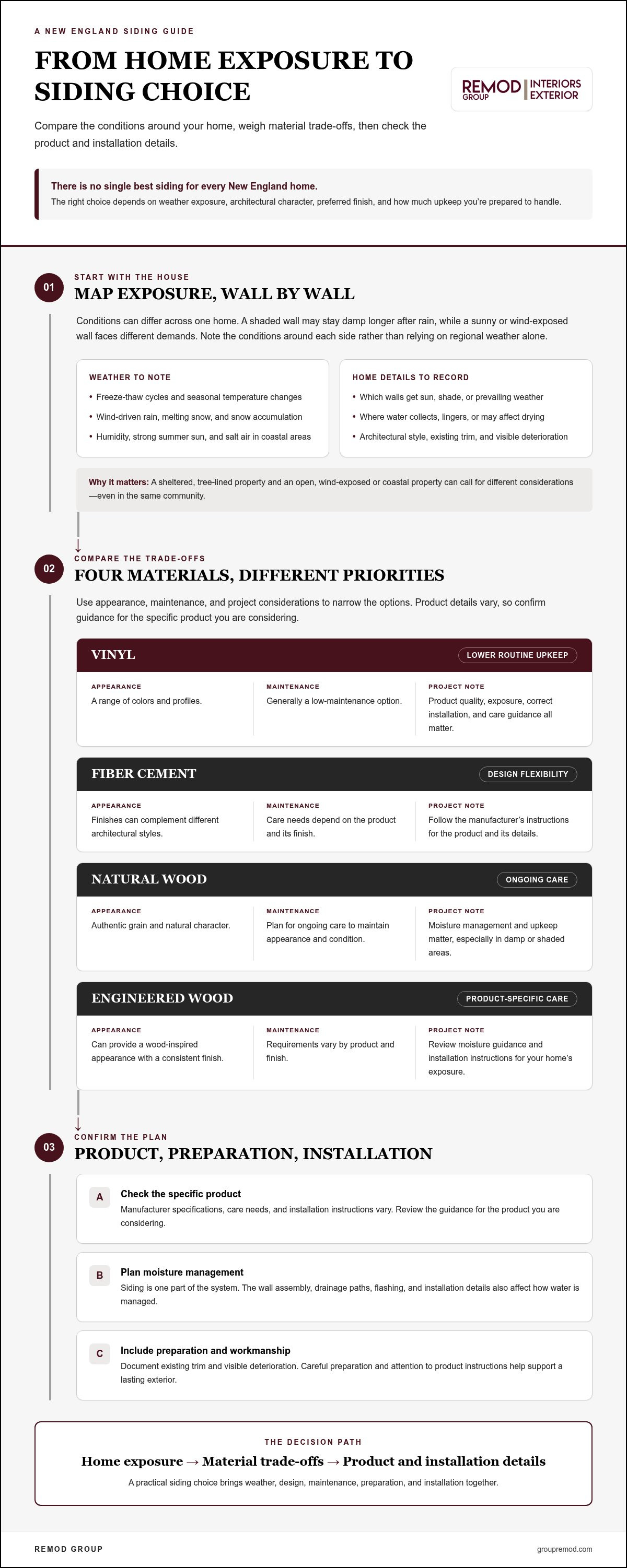
Best Siding for New England Starts with Your Home’s Exposure
The best siding for New England is the material that fits your home’s exposure, architectural character, preferred finish, and maintenance priorities. Regional weather matters, but each wall can experience it differently. A shaded wall and a sunny, wind-exposed wall may need different considerations even on the same house.
Across Massachusetts and the broader region, siding may face freeze-thaw cycles, wind-driven rain, humidity, snow, and strong summer sun. A wall beneath mature trees, for example, may stay damp longer after rain than an exposed wall. No single siding material is best for every New England home; the right choice depends on how climate, design, and maintenance needs come together at your property.
Which New England weather conditions matter most for siding?
Repeated freezing and thawing can stress siding and vulnerable joints, particularly if moisture gets into gaps or behind the exterior. Rain and melting snow make moisture management important, but siding is only one part of the system. The wall assembly, drainage paths, flashing, and installation details all affect how water is managed. For a general overview of siding materials and installation approaches, see this reference on siding.
Sun and shade affect maintenance, too. Strong sun can contribute to fading, while shaded areas may stay damp longer after rain and need closer attention. Wind exposure, snow accumulation, and humidity are additional factors. Assess the conditions around each side of the house rather than relying on regional weather alone.
How does the house itself change the siding decision?
Consider architectural style, existing trim, and the finish you want alongside weather performance. A material and profile that complement a traditional home may create a different effect on a contemporary exterior. Note distinctive features, the condition of the trim, and any visible deterioration so that design and preparation needs are part of the decision from the start.
Then look at the home’s orientation and surroundings. A wall facing prevailing weather may receive more wind-driven rain. Nearby trees can create shade and affect drying, while water exposure around the home can influence maintenance needs. These observations help guide planning, though they do not replace an assessment of the full exterior.
In MetroWest, one home may sit in a sheltered, tree-lined setting, while another nearby has open exposure and little shade. Coastal Massachusetts brings other considerations, including salt air and wind. These differences help explain why a material that suits one property may not be the best fit for another, even in the same community.
Start by noting which walls get sun, where water collects or lingers, and which areas are most exposed. Pair those observations with the home’s style and the level of upkeep you’re comfortable handling. This gives you a practical basis for comparing materials beyond appearance alone.
Vinyl, Fiber Cement, Wood, and Engineered Wood: New England Siding Compared
Each siding material has a different balance of appearance, upkeep, and installation considerations. Use the comparison below to identify which trade-offs matter most for your home. Product details vary, so read the manufacturer’s care and installation guidance before choosing a specific product.
How do vinyl and fiber cement differ in New England?
Vinyl may suit homeowners who want a range of looks and relatively modest routine upkeep. Fiber cement offers design flexibility that can support different architectural styles. Neither is automatically the better choice for every New England home. Compare the specific products, consider the walls’ exposure, and decide which finish and care routine suit your priorities. Manufacturer specifications and maintenance instructions vary, so review the guidance for the products you’re considering.
Installation quality matters for both materials. Preparation and attention to product instructions help ensure the siding is installed as intended. Even a low-maintenance material benefits from sound planning and careful execution.
When might wood or engineered wood suit a home?
Natural wood can appeal to homeowners who value its distinctive grain and traditional character. That look comes with ongoing maintenance, as well as the need to pay attention to moisture around the siding. Engineered wood may suit homeowners looking for a wood-inspired appearance, but its care and installation requirements depend on the product. Rather than relying on general lifespan claims, compare product information and maintenance instructions.
The best siding for new england is the option whose appearance and care requirements fit your home and its exposure. Remod Group provides siding installation, bringing material choice, preparation, and installation together as one exterior project.
Does New England Weather Make One Siding Material the Clear Winner?
Cold winters can make weather resistance seem like the only factor that matters. But performance in one condition doesn’t make a material the automatic choice for every home. A sheltered house, a wind-exposed wall, and a shaded exterior face different demands, even in the same town.
Siding performance depends on both the material selected and the quality of its installation. Vinyl, fiber cement, wood, and engineered wood each have their own appearance and care considerations. Suitability also depends on product specifications, project details, and how you plan to maintain the exterior. The best siding for New England is a considered match, not a universal ranking.
Does siding material alone prevent moisture problems?
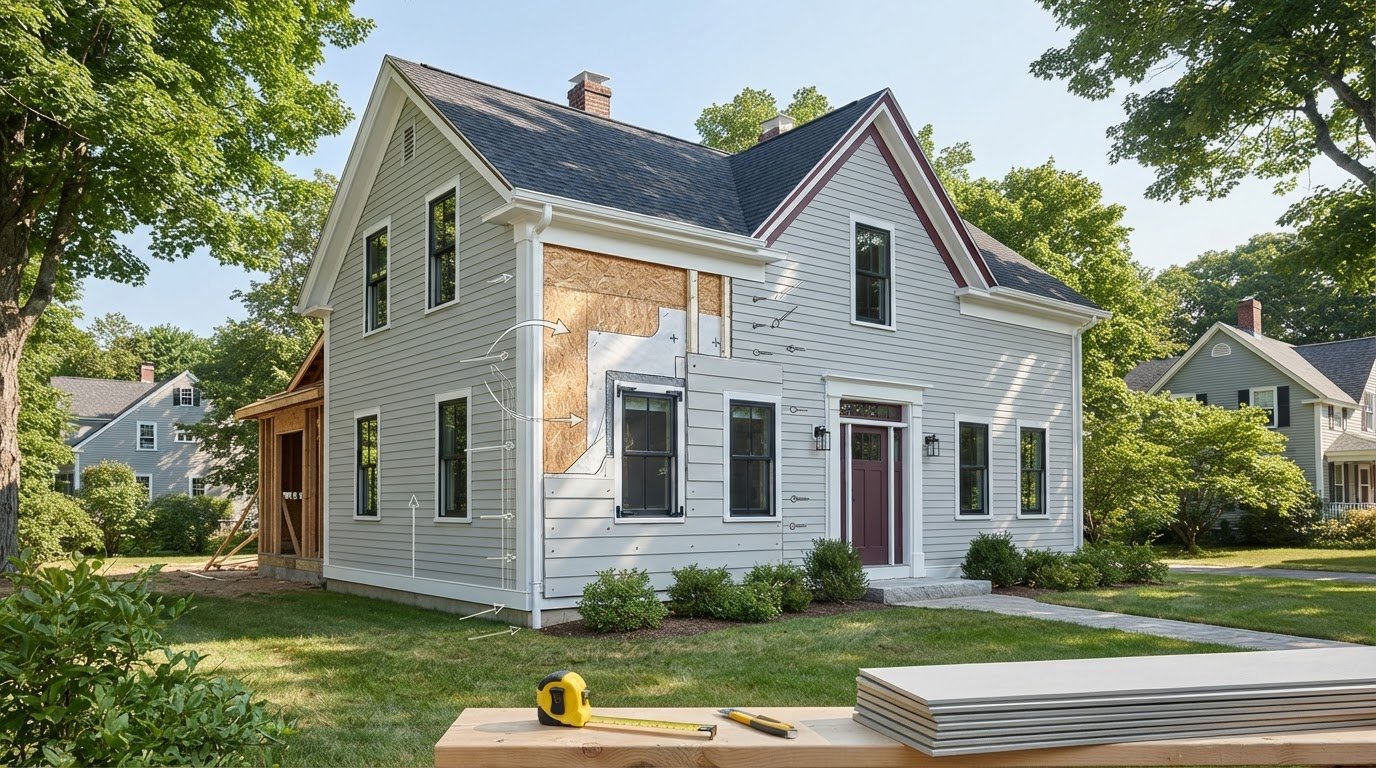
No. Siding is one part of the exterior wall, and choosing a particular material does not, by itself, resolve moisture concerns. Drainage paths, flashing around openings, joints, and the condition of underlying wall layers all affect water management. Installation details should work together to protect the exterior and direct moisture away appropriately.
Visible siding can show signs of wear, but its appearance alone can’t confirm the condition of concealed layers behind it. If a project raises questions about what lies beneath the surface, those conditions require a project-specific assessment rather than assumptions based on the visible finish. Preparation and careful detailing matter along with material selection.
Which trade-offs matter more than a single material ranking?
Start with the factors you’ll live with: the appearance you want, the routine care you’re comfortable doing, the walls most exposed to rain or sun, and how long you expect to stay in the home. One homeowner may prioritize a finish that complements the architecture; another may put more weight on minimizing upkeep. Both are valid priorities.
Your surroundings can change the balance. A shaded wall near dense vegetation may dry differently from a sunny, open wall. Areas that receive more wind-driven rain call for closer attention to joints and water-management details. These conditions can influence maintenance expectations regardless of siding type.
Instead of relying on broad claims about lifespan or savings, compare each product’s documented care guidance with your home’s conditions and your priorities. Then consider how preparation, installation, and detailing will support the siding as part of the complete exterior. A sound decision accounts for the material, the home, and the work required to bring them together.
How to Choose Siding for a Massachusetts or New England Home
A step-by-step selection process helps connect the look you want with the practical demands of your property. Use these five steps to move from initial observations to a project plan.
Assess exposure. Note which walls receive direct sun, shade, strong wind, or wind-driven rain. Record places where moisture lingers, along with nearby trees or landscaping that may affect access or upkeep.
Set maintenance preferences. Decide how much routine care you’re comfortable with and what finish suits your home. Set these priorities before comparing product specifications.
Compare materials. Weigh appearance, care requirements, and manufacturer guidance against the conditions you recorded. Focus on options that suit both the house and your expectations for maintaining it.
Review the details. Document architectural features, existing trim, and visible deterioration. Consider how they may affect preparation and the finished appearance.
Plan installation. Account for the project scope and site conditions. Local building requirements and each product’s installation instructions are project-specific details to address as the plan takes shape.
Photos and written notes make your observations more useful. Capture each side of the home, distinctive trim, and areas where the existing siding looks worn. These records keep material selection grounded in the property, rather than a sample or general recommendation alone.
How should homeowners compare siding project proposals?
Compare the scope, not just the material names. Review what each proposal says about preparation, installation details, trim, and cleanup. Look for a clear explanation of how the material fits the home and how the work is planned. Comparing equivalent scopes makes it easier to understand what’s included and where plans differ.
A useful project outline connects the selected material, the home’s visible features, the preparation required, and the installation sequence. A Massachusetts siding installation plan should account for these elements as one coordinated exterior project. For homeowners narrowing down the best siding for new england, this whole-project view helps turn preferences into practical decisions.
Remod Group provides siding installation for homeowners in Hudson, Natick, Sudbury, Waltham, Ashland, Hopkinton, Bolton, Northborough, Southborough, Westford, Stow, Maynard, Wayland, Concord, Weston, Wellesley, Sherborn, Acton, Boxborough, Berlin, Shrewsbury, Boylston, Newton, Needham, Dedham, and Dover. Material choice, preparation, and installation come together in a coordinated project.
Plan a Siding Project That Performs in New England
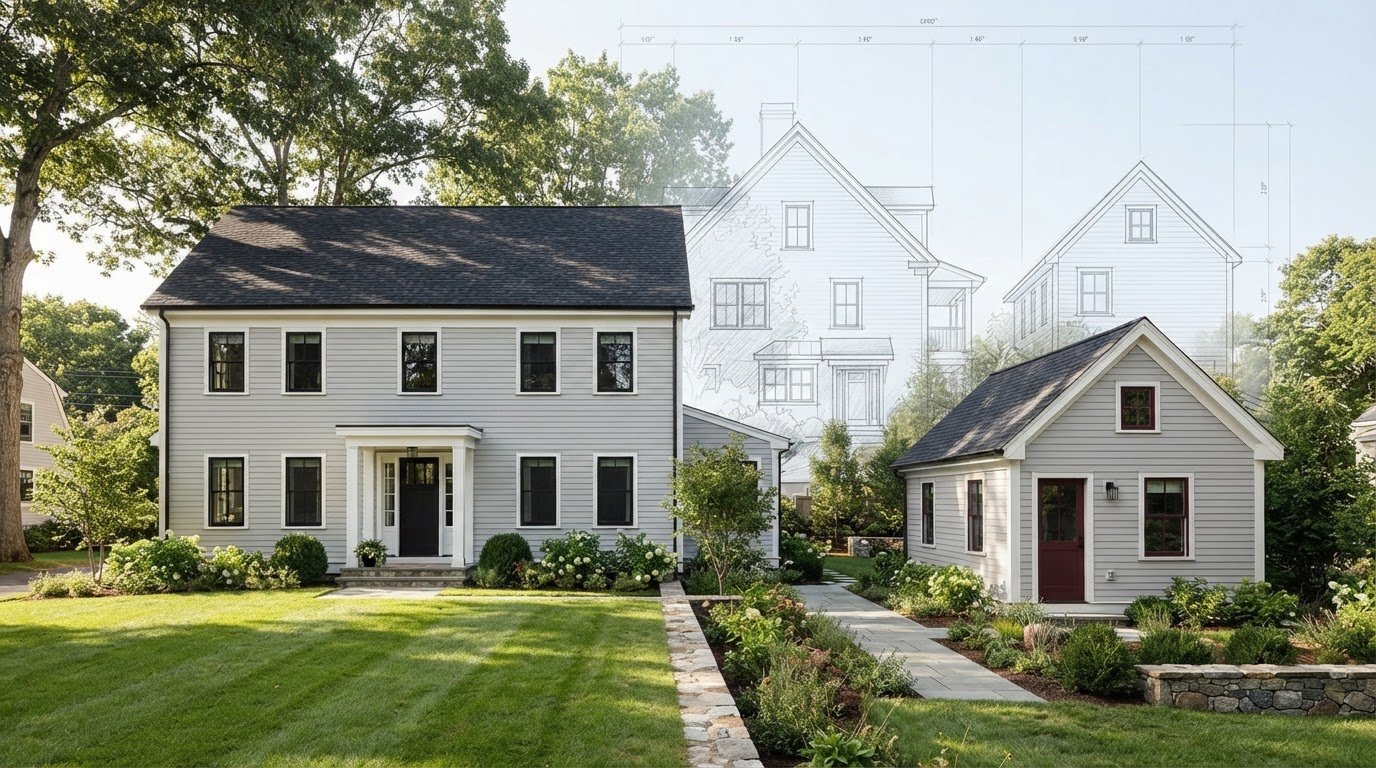
A successful siding project involves more than selecting a material. It brings together the home’s existing exterior, thoughtful preparation, precise detailing, and a finish that complements the architecture. Each decision informs the next: the selected material affects installation needs, while the home’s condition and design help define the scope.
What should a well-planned siding installation address?
The scope should reflect both the selected siding and the exterior it will cover. Existing trim, corners, openings, transitions, and visible wear all affect preparation and finishing. A considered plan accounts for how these elements connect instead of treating siding as a surface layer alone.
Preparation and consistent detailing matter. The installation approach should respond to the home’s condition and follow applicable project requirements and the manufacturer’s guidance for the chosen product. Methods vary by material, so plan for the actual home rather than making assumptions in advance.
Design belongs in the plan, too. Consider how the siding, trim, and surrounding exterior elements will look together from the street and at close range. For homeowners comparing the best siding for new england, this whole-project view connects material preference with practical preparation and a cohesive finished appearance.
When does coordinated exterior work make sense?
Roofing or window work may make sense alongside siding if those parts of the exterior also need attention. For instance, replacing windows during a siding project can help coordinate the finish around openings. If roofing is part of a broader renovation, planning the roof edge and siding transition together can keep the scope clear. Combined work should reflect the home’s needs, not add tasks without a reason.
Before work begins, note which exterior elements need attention, the finish you hope to achieve, and how the project should account for existing details. If roofing overlaps with siding, a Massachusetts residential roofing contractor guide can offer additional context for that part of the renovation.
Remod Group provides siding installation, roofing, and window and door installation. When the project calls for coordinated exterior work, these services can be considered together. A clear scope brings material selection, preparation, and connected details into one plan.
Learn more about Remod Group siding installation services and how they fit into a carefully planned exterior update.
Move Forward with a Siding Plan Built for Your Home
The best siding for new england is the material that fits your home’s exposure, appearance, and maintenance priorities. Vinyl, fiber cement, wood, and engineered wood each bring different trade-offs, and none is a universal winner. A lasting result also depends on thoughtful preparation, careful detailing, and installation that follows the selected product’s guidance.
With your priorities clear, turn them into a complete project plan. Remod Group provides siding installation in Hudson, Natick, Sudbury, Waltham, Ashland, Hopkinton, Bolton, Northborough, Southborough, Westford, Stow, Maynard, Wayland, Concord, Weston, Wellesley, Sherborn, Acton, Boxborough, Berlin, Shrewsbury, Boylston, Newton, Needham, Dedham, and Dover. Roofing or window and door work can also be considered when it’s part of the broader exterior renovation.
Plan your siding installation with Remod Group and take the next step toward an exterior update shaped around your home.
Frequently Asked Questions
What is the best siding for a New England home?
There’s no single material that’s right for every New England home. The best siding for new england depends on exposure to sun, wind, rain, and shade, as well as the home’s architectural style and your preferred level of maintenance. Compare vinyl, fiber cement, wood, and engineered wood by their appearance, care requirements, and product-specific installation guidance to find a fit for your property and priorities.
Is vinyl or fiber cement siding better for New England winters?
Neither material is automatically better for every home in winter. Vinyl may appeal to homeowners seeking a low-maintenance option, while fiber cement offers flexibility in appearance. For both, product specifications, wall conditions, and installation details matter. Compare manufacturer instructions and care guidance, then consider how your home’s exposure to wind, moisture, and sun affects the choice.
Can wood siding work in New England’s climate?
Yes, wood siding can suit a New England home, especially when its natural grain and character complement the architecture. Plan for ongoing maintenance and pay attention to moisture management, particularly in areas that are shaded or slow to dry. Engineered wood is another option for a wood-inspired appearance, though care and installation guidance vary by product. Review product-specific information rather than relying on general lifespan claims.
How does New England weather affect siding?
New England weather exposes siding to seasonal temperature changes, freeze-thaw cycles, wind-driven rain, humidity, snow, and summer sun. These conditions can affect wear, fading, and maintenance needs, but not all walls experience them equally. Orientation, shade, landscaping, and drainage influence exposure. Moisture management also depends on joints, flashing, the wall assembly, and installation details, not just the siding material.
Does siding installation matter as much as the material?
Yes. The material and its installation both contribute to the finished exterior. Preparation, joints, flashing, transitions, and following the manufacturer’s instructions all matter to a well-planned project. Siding covers only part of the exterior wall system, so visible siding alone can’t show the condition of concealed layers. Remod Group provides siding installation as part of its exterior construction work in Massachusetts and nearby communities.
How much maintenance does siding need in New England?
Maintenance depends on the material, its finish, the manufacturer’s instructions, and the home’s surroundings. Vinyl is generally a low-maintenance option, while natural wood usually calls for ongoing care to preserve its appearance and condition. Shaded areas near vegetation may stay damp longer than sunny, open walls, affecting upkeep. Use product-specific care guidance and consider each wall’s exposure when planning routine checks.
What should I compare when choosing siding for a Massachusetts home?
Compare appearance, maintenance, weather exposure, product guidance, preparation, installation details, trim, and project scope. Remod Group provides siding installation in Hudson, Natick, Sudbury, Waltham, Ashland, Hopkinton, Bolton, Northborough, Southborough, Westford, Stow, Maynard, Wayland, Concord, Weston, Wellesley, Sherborn, Acton, Boxborough, Berlin, Shrewsbury, Boylston, Newton, Needham, Dedham, and Dover. A clear scope connects your material choice with the home’s existing exterior and installation plan.

Comments