
Deck Construction Cost in Massachusetts: 2026 Budgeting & Planning Guide

Why does a deck quote in the MetroWest area feel like it's priced for a different reality than the national averages you see online? It's a common frustration for homeowners seeking to elevate their outdoor living. You want clarity, yet you're met with conflicting estimates and confusion over material performance in our volatile climate. Understanding the true deck construction cost Massachusetts requires looking beyond the surface. It demands a focus on structural integrity, local regulations, and long-term investment value.
You already know that New England weather is unforgiving. A deck here isn't just a simple platform; it's a sophisticated structure built to withstand deep frost cycles, heavy snow loads, and high humidity. We promise to navigate these complexities with you through expert insights on technical mastery and material longevity. This guide provides a clear framework for your 2026 project. We will examine the latest state building codes, the shift toward cellular PVC, and the confidence that comes from partnering with a professional construction firm rather than a handyman.
Table of Contents
Understanding the Massachusetts Deck Market in 2026
The architectural landscape of Massachusetts is undergoing a profound transformation. Homeowners are no longer satisfied with a basic wooden platform; they're demanding sophisticated, multi-functional outdoor environments that serve as seamless extensions of their interior living space. This shift toward high-end structural additions means that generic "national average" calculators often fail MetroWest residents. These online tools rarely account for the regional complexities of the 780 CMR building code or the specialized labor requirements of the Boston suburbs. Understanding the true deck construction cost Massachusetts requires a nuanced perspective on local economic drivers and the distinction between a simple DIY project and a professional structural installation.
Macroeconomic Factors Affecting Local Construction
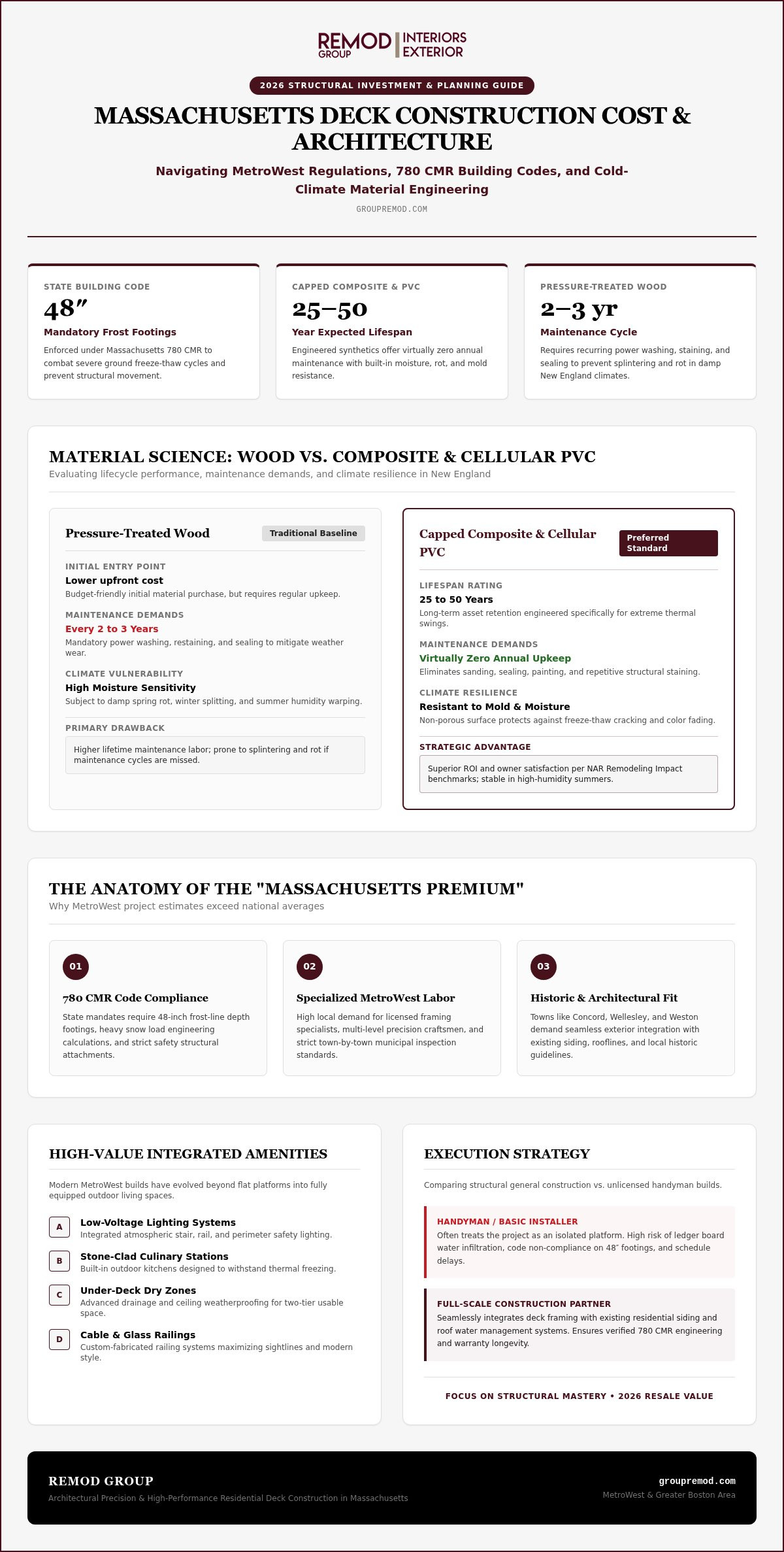
As we move through 2026, supply chain dynamics continue to influence local construction timelines and material availability. While global logistics have stabilized, the demand for premium, high-performance materials like cellular PVC remains high in New England. This demand is compounded by a persistent shortage of specialized labor in the Massachusetts trades. Skilled craftsmen who possess the technical mastery to execute complex, multi-level designs are in high demand. The "MetroWest Premium" refers to the elevated labor rates in affluent Massachusetts corridors, where high demand for licensed specialists and rigorous municipal inspections create a higher baseline for professional services. Today's projects frequently include integrated amenities that were once considered luxuries, such as:
Custom low-voltage atmospheric and safety lighting systems
Integrated outdoor culinary stations and stone-clad kitchens
Advanced weather-proofing for under-deck dry zones
Custom-fabricated railing systems using cable or glass
The Evolution of Outdoor Living in New England
Modern residential deck construction in towns like Concord and Wellesley has evolved into a discipline of tiered living zones. Designers now prioritize "outdoor rooms" that mirror the home's interior flow, creating dedicated spaces for dining, lounging, and cooking. This evolution requires a deep understanding of how to integrate new structures with existing home architecture, especially in historic districts. Durability has become the primary market driver in 2026. Massachusetts homeowners are increasingly investing in structural resilience to combat the extreme freeze-thaw cycles that define our winters. A deck is no longer viewed as a temporary addition; it's a permanent structural asset. By focusing on technical mastery and high-quality materials, you ensure that your deck construction cost Massachusetts translates into a long-term investment that retains its aesthetic appeal and structural integrity for decades.
Primary Drivers of Deck Construction Investment
The deck construction cost Massachusetts homeowners encounter is rarely just a matter of square footage. It's a reflection of structural engineering, material science, and site-specific challenges. While the surface boards receive the most attention, the true value of your investment lies beneath the exterior finish. A professional build prioritizes the "bones" of the structure, ensuring it remains stable through decades of shifting temperatures. In the MetroWest area, where property values are high and architectural standards are rigorous, cutting corners on structural integrity isn't just a risk; it's a financial liability.
Material Science: Wood vs. Composite in Cold Climates
Natural wood offers an undeniable warmth and a lower initial entry point. However, the damp springs and humid summers of New England are unforgiving to organic materials. Pressure-treated lumber, while affordable, requires a consistent cycle of power washing, staining, and sealing every two to three years to prevent rot and splintering. For luxury homes in towns like Wellesley and Weston, capped composite and cellular PVC have become the preferred choice. These materials offer a 25 to 50 year lifespan with virtually zero annual maintenance. According to the NAR Remodeling Impact Report, high-quality outdoor features significantly boost homeowner satisfaction and provide a reliable return on investment at resale. Choosing premium materials isn't just about aesthetics; it's about engineering a space that resists the mold, fading, and moisture absorption common in our climate.
Site preparation is another significant variable. Massachusetts soil is notoriously rocky, filled with the glacial till left behind thousands of years ago. Excavating for the mandatory 48-inch footings often requires specialized machinery to navigate boulders and uneven terrain. If your backyard features a steep slope, the complexity of the framing increases. Multi-level designs and elevated platforms require sophisticated ledger attachments and lateral load bracing to meet modern safety standards. These technical requirements ensure your deck remains a permanent, safe extension of your home rather than a temporary addition.
Architectural Complexity and Custom Features
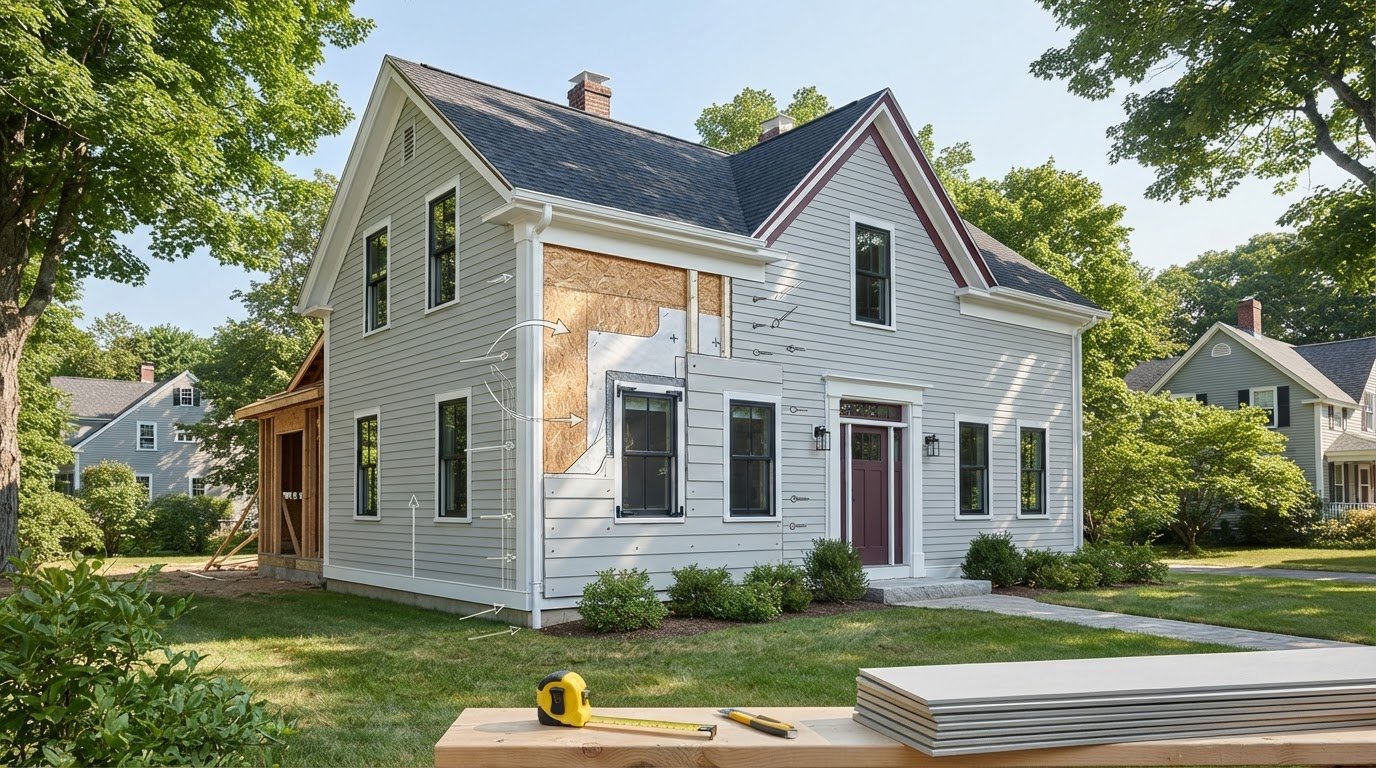
Modern outdoor living demands more than a simple rectangle. Complex wrap-around designs, custom-angled stairs, and integrated landings increase labor requirements but transform the utility of the space. Integrating a new deck with your existing home architecture requires a holistic view of the exterior. We often find that a deck project is the perfect time to evaluate your siding installation or roofing to ensure structural harmony and a unified aesthetic. Hidden fasteners, glass railing systems, and built-in benches add layers of sophistication that distinguish a custom build from a generic installation. These details require a level of precision and technical mastery that only a full-scale construction firm can provide, ensuring every joint is tight and every line is level.
The Regulatory and Structural 'Massachusetts Premium'
Building in the Commonwealth involves more than just selecting premium finishes. The "Massachusetts Premium" is a direct result of the Massachusetts State Building Code (780 CMR), a rigorous set of standards designed to ensure structural resilience in an unforgiving climate. One of the most significant drivers of the deck construction cost Massachusetts homeowners face is the mandatory 48-inch frost line footing requirement. While southern states might allow shallow foundations, Massachusetts law requires excavation to a full four feet below grade. This depth prevents frost heave, a destructive force where freezing groundwater expands and shifts the entire structure, leading to catastrophic failure over time. For elevated decks, professional engineering becomes a non-negotiable component of the planning phase to ensure the frame can support regional snow loads that vary from 35 to 70 pounds per square foot.
Code Compliance and Safety Standards
The transition to the Tenth Edition of the State Building Code has introduced stricter requirements for lateral load connections. Modern decks must now utilize specific tension-tie brackets that secure the deck frame directly to the home's internal floor joists. These hardware requirements, while increasing the initial investment, provide essential protection against deck collapse. Safety also extends to the perimeter; Massachusetts codes are precise regarding railing heights and baluster spacing to prevent accidents. Adhering to these standards isn't just about passing an inspection. It's about protecting your home's long-term resale value and ensuring the safety of every guest who steps onto the platform. Technical mastery in these structural details distinguishes a professional build from a temporary installation.
The Impact of Local Permitting and Inspections
Navigating the bureaucracy of municipal building departments requires a seasoned partner. In towns like Newton, Waltham, and Natick, permit lead times can range from three to eight weeks depending on the complexity of the project and the current backlog in Middlesex or Norfolk counties. A professional firm manages this entire administrative cycle, from filing the initial Request for Determination with the Conservation Commission to coordinating the final structural inspection. This oversight is vital for your financial security. An unpermitted deck is a significant legal and financial liability during Massachusetts real estate transactions, often requiring costly retroactive permitting or total demolition before a sale can proceed. By securing the proper permits from the start, you ensure your project is recognized as a legal, high-quality improvement to your property.
Maximizing ROI: Is a Custom Deck Worth the Investment?
Determining if the deck construction cost Massachusetts homeowners face is a sound investment requires looking past the initial invoice. In high-end suburban markets, a professionally executed outdoor space is a powerful differentiator. It's an investment in lifestyle that simultaneously bolsters your home's equity. While national averages suggest a generic recoup value, the specific demand for "outdoor oases" in the Boston suburbs often drives these figures higher during appraisals. A custom structure doesn't just add square footage; it adds a level of sophisticated utility that modern buyers actively seek.
Real Estate Trends in the MetroWest Corridor
In towns like Sudbury and Acton, buyers aren't just looking for a house; they're looking for a sanctuary. A custom deck serves as a primary entertaining zone that expands the usable footprint of the property. Local real estate data indicates that a wood deck addition typically recoups between 66% and 95% of its value at resale, while composite decks offer a return of 68% to 89%. While exterior renovations like siding installation or roofing are essential for protection, a custom deck provides the emotional impact that closes deals in competitive markets. Professional craftsmanship ensures these structures feel like integral parts of the home's architecture rather than afterthoughts.
Long-Term Durability and Maintenance Savings
The true cost of a deck is measured over a decade. Choosing a lower-cost natural wood option often introduces hidden expenses that accumulate quickly. In our climate, a wood deck requires professional power washing, staining, and sealing every few years to prevent structural decay. Over ten years, these maintenance cycles can cost as much as a significant portion of the original installation. Premium composite and cellular PVC materials typically break even within eight to twelve years because they eliminate these recurring costs and resist rot. Building it once and building it right means prioritizing structural mastery and high-performance materials to eliminate the financial drain of perpetual repairs. This approach ensures the total deck construction cost Massachusetts families see over the life of their home remains manageable and predictable.
Delaying your project often results in a "cost of inaction." With construction costs in the Commonwealth running approximately 38% higher than national averages, waiting for a "better time" usually leads to higher material prices and labor rates. Investing now secures your outdoor lifestyle and protects you from the escalating costs of the 2026 market. If you're ready to transform your backyard into a durable, high-value asset, begin your project planning with our structural experts to secure your place on our 2026 build schedule.
The Remod Group Advantage: Expert Structural Construction
Selecting the right partner for a significant exterior renovation is a decision that resonates through your home's safety and future market value. There is a fundamental difference between a simple wooden platform and a custom structural addition. While a standalone handyman might be suitable for minor repairs, they often lack the specialized insurance, Construction Supervisor License (CSL), and technical mastery required for a complex build. Remod Group operates as a visionary guide, bridging the gap between your initial inspiration and a finished product that stands the test of time. This level of professional oversight is a critical component of the total deck construction cost Massachusetts residents invest in their properties.
Professional Project Management and Integrity
Professional project management means we handle the heavy lifting of municipal bureaucracy. We manage the entire administrative cycle, from the initial engineering reviews to the final inspections in towns like Hudson and Natick. Our team's 20+ years of local experience allows us to navigate permit delays and regulatory hurdles with ease. You receive a structured, well-managed process characterized by transparent communication and an unwavering commitment to excellence. This professional integrity provides the peace of mind that your investment is protected by a team that takes its craftsmanship seriously. You don't have to worry about the technical nuances of the 780 CMR; we ensure every joint and footing surpasses state standards.
Our integrated approach distinguishes our process from traditional contractors. We understand that a deck doesn't exist in isolation; it must harmonize with your home's envelope. If your design requires a seamless transition with a new siding installation or roofing system, our team coordinates the entire structural scope. This ensures that ledger boards are flashed with surgical precision to prevent the rot and ice damming issues common in New England. By serving premium MetroWest communities like Wellesley, Concord, and Weston, we've refined a methodology that prioritizes both aesthetic sophistication and structural harmony. It's a holistic strategy that prevents the common moisture issues that plague less sophisticated builds.
Your Next Steps for a Custom Massachusetts Deck
Planning for a 2026 build requires a proactive approach. Given the current demand for high-end outdoor living spaces and the specialized labor market in Massachusetts, early consultation is essential to securing your timeline. We invite you to prepare for your initial meeting by considering how you intend to use your tiered living zones and which premium materials best suit your lifestyle. Start your transformation with a professional estimate from Remod Group today. Our masters of the craft are ready to turn your vision into a tangible, high-quality reality. Understanding the true deck construction cost Massachusetts homeowners face is the first step toward a project built with technical mastery and long-term value.
Realizing Your Vision for a Durable Outdoor Oasis
Investing in your home's exterior is a commitment to both lifestyle and long-term stability. As you evaluate the deck construction cost Massachusetts requires in 2026, remember that technical mastery and regulatory compliance are the foundations of true value. A successful project balances sophisticated material science with the structural resilience needed to withstand New England's climate. By prioritizing professional project management, you avoid the administrative burdens of permitting and the risks of substandard work.
With 20+ years of New England remodeling expertise, Remod Group specializes in high-impact exterior structural projects that transform properties. We serve the MetroWest with premium craftsmanship, acting as your visionary guide from the first sketch to the final inspection. Don't let another season pass without the outdoor space you deserve. Schedule a Consultation for Your Custom Massachusetts Deck and take the first step toward an enduring, high-value addition to your home.
Frequently Asked Questions
Do I need a building permit for a deck in Massachusetts?
Yes, nearly every residential deck project in the Commonwealth requires a municipal building permit. Under the 780 CMR state code, a permit is mandatory for any deck attached to a home or any freestanding structure exceeding 200 square feet. Navigating the requirements in towns like Waltham or Natick involves submitting detailed structural plans. Professional contractors manage this administrative burden to ensure your investment remains legally compliant and safe for long-term use.
How long does it typically take to build a custom deck in the Boston area?
A professional deck project typically spans eight to twelve weeks from the initial planning phase to the final inspection. The administrative permitting process in Middlesex County often requires four to eight weeks, depending on the specific town's backlog. The physical construction phase usually takes two to four weeks for a sophisticated, multi-level design. We coordinate every phase with technical mastery to minimize disruptions while maintaining our commitment to meticulous execution and structural integrity.
What is the best decking material for the New England climate?
Capped composite and cellular PVC are the superior choices for the volatile New England climate. These high-performance materials resist the moisture absorption, splintering, and mold growth that often plague natural wood in humid Massachusetts summers. While the initial deck construction cost Massachusetts homeowners pay is higher for these premium options, they provide decades of durability. You'll avoid the recurring labor of staining and sealing while enjoying a sophisticated, high-end aesthetic that lasts.
Will a new deck increase my property taxes in towns like Wellesley or Newton?
Adding a custom structural deck generally increases your home's assessed value, which may lead to a modest adjustment in property taxes. In high-value markets like Wellesley or Newton, town assessors view a professionally built outdoor living space as a significant permanent improvement. However, this increase reflects the enhanced equity and resale appeal of your property. It's a strategic investment that balances immediate lifestyle quality with a long-term boost to your home's total market valuation.
How deep do deck footings need to be in Massachusetts?
Structural deck footings must reach a minimum depth of 48 inches below finished grade across the Commonwealth. This 4-foot requirement is mandated by the Massachusetts State Building Code to prevent frost heave during our harsh winters. Excavating to this depth ensures the foundation rests below the frost line, maintaining the stability of the entire structure. Our team utilizes technical mastery to navigate the rocky glacial till common in the MetroWest area during this critical phase.
Can Remod Group help with both my deck and my home's siding?
Remod Group specializes in integrated exterior renovations, including both custom deck builds and professional siding installation. Coordinating these services ensures a seamless transition between your home's envelope and the new structure. We prioritize precise ledger flashing and moisture protection, which is far easier to execute when managing both scopes simultaneously. This holistic approach protects your home from water intrusion while creating a unified, sophisticated aesthetic for your entire property exterior.
What is the difference between a handyman and a structural deck contractor?
The primary difference lies in technical mastery and legal accountability for structural integrity. A handyman typically handles minor cosmetic repairs, whereas a structural contractor like Remod Group manages full-scale installations requiring a Construction Supervisor License. We provide professional project management, comprehensive insurance, and an expert understanding of the 780 CMR building code. Choosing a master craftsman ensures your deck is engineered for extreme snow loads rather than just being a temporary platform.
Is composite decking worth the extra investment for a Massachusetts home?
Composite decking is an excellent investment for Massachusetts homeowners seeking long-term value and durability. Although the upfront deck construction cost Massachusetts residents encounter is higher than pressure-treated wood, the maintenance savings are substantial. You eliminate the need for annual power washing, staining, and sanding. Over a decade, the cost of ownership often breaks even, leaving you with a beautiful, splinter-free surface that retains its high-end appearance despite our extreme freeze-thaw cycles.
Comments