
Energy Efficient Windows in Boston: A Homeowner’s Guide

A window can carry an impressive efficiency label and still be the wrong choice for a Boston home. If you feel drafts, notice chilly rooms near the glass, or struggle with temperature swings, the right solution depends on more than a marketing claim. Choosing energy efficient windows Boston homeowners can rely on means matching verified performance to the home, its exposure, and the comfort concerns that matter most.
Boston’s cold winters and changing seasonal conditions make heat transfer an important part of the decision. But lower heat loss isn’t the only consideration. Ratings, glazing, frame design, and the home’s appearance all play a role. To make options easier to compare, focus on what each rating measures and how the window will perform in the specific room and opening.
This guide explains which features influence window efficiency and comfort, how to compare ratings such as U-factor and Solar Heat Gain Coefficient (SHGC), and what to record before planning a replacement. You’ll also learn how to weigh performance against architectural character and project needs. With a considered approach, window replacement can improve the home envelope without relying on a single product claim.
Table of Contents
Why Energy Efficient Windows Matter in Boston Homes
An energy-efficient window is more than a pane of glass. It’s a complete unit, including glazing, frame, seals, and the fit within its opening, designed to limit unwanted heat transfer. In Boston, that performance matters during long heating seasons, but it can also affect comfort when rooms warm unevenly or feel exposed to summer sun.
Window efficiency is one part of a home’s energy picture, not a guarantee of a particular utility-bill reduction. Insulation, air leakage elsewhere, heating and cooling equipment, and household use all influence energy consumption. A better-performing window may address a specific comfort concern, but its contribution depends on the house as a whole.
Window efficiency is measurable performance matched to a home’s climate, exposure, and comfort needs. Look beyond a product label to understand how the complete unit manages heat and light. The overview of Window insulation provides useful context on how window design can influence heat transfer.
How Boston’s seasonal conditions affect window comfort
During cold weather, heat can move from a warmer room toward the colder outdoors through window glass and other parts of the assembly. Near older or poorly sealed windows, that transfer can contribute to a chilly feeling, especially when you’re sitting close to the glass. The room may feel uncomfortable even if the thermostat setting hasn’t changed.
Summer brings a different consideration: sunlight can warm a room as it passes through the glass. The effect varies with window direction, shading, nearby buildings, and the room itself. A sun-exposed space may need a different balance of light and solar heat control than a shaded one, so Boston homes shouldn’t be treated as if they all have identical conditions.
What homeowners may notice around inefficient windows
Drafts, uneven temperatures, and condensation are clues to investigate, not automatic proof that a window has failed. A noticeable cold sensation beside the glass may relate to heat transfer through the glazing. Air movement near the frame or opening may point to leakage around the window instead. These issues can feel similar, but they have different possible causes.
Condensation also needs context. Moisture on the room-side glass can occur when indoor humidity meets a cold surface; it doesn’t, by itself, establish that the window is defective. Note where moisture appears and when it happens. Record which rooms feel uncomfortable, the time of day, outdoor conditions, whether you feel moving air, and whether symptoms change with blinds or curtains open. Those observations help clarify the concern before you weigh replacement options.
How Energy Efficient Windows Control Heat, Light, and Airflow
Window performance comes from several parts working together. Glass influences heat and light transfer, the frame affects insulation around the glazing, and the fit at the opening helps limit unwanted air movement. Comparing only pane count or a broad “energy efficient” claim can miss how those elements combine in an installed window.
U-factor, SHGC, and ENERGY STAR in plain English
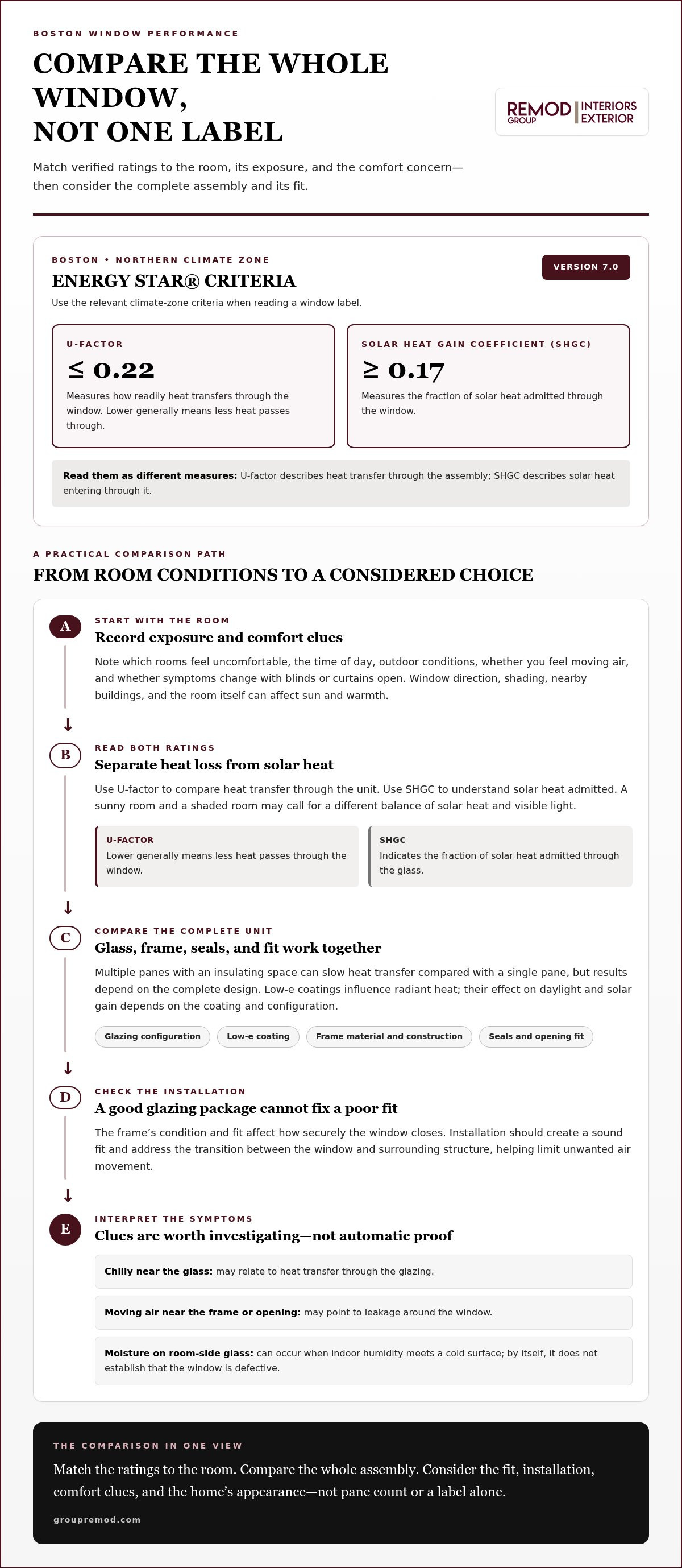
U-factor measures how readily heat transfers through a window. A lower U-factor generally means less heat passes through the unit. Solar Heat Gain Coefficient (SHGC) measures the fraction of solar heat admitted through the window. U-factor describes heat transfer through the assembly, while SHGC describes solar heat entering through it.
That distinction matters because sunlight and shade vary by window exposure. A sunny room may benefit from a different balance of solar heat and visible light than a shaded room. The National Fenestration Rating Council (NFRC) provides independent ratings that help homeowners compare reported performance on a consistent basis.
As of October 2026, ENERGY STAR Version 7.0 applies. Boston is in the Northern climate zone, where the stated criteria for qualifying windows are a U-factor of 0.22 or less and an SHGC of 0.17 or greater. Read the label in the context of the relevant climate zone, rather than assuming that any ENERGY STAR mark means the same performance is suitable for every location or exposure.
Glass, frame, and installation all contribute
Multiple panes separated by an insulating space can slow heat transfer compared with a single pane, though results depend on the complete design. Low-emissivity, or low-e, coatings are applied to glass to influence the movement of radiant heat. Their effect on daylight and solar gain depends on the coating and window configuration, so pane count alone doesn’t tell the whole story.
Frames matter, too. Their material and construction influence heat flow around the glass, while the frame’s condition and fit affect how securely the window closes. A carefully selected glazing package can’t compensate for air leaks around a poorly fitted opening. Installation should create a sound fit and address the transition between the window and the surrounding structure.
For energy efficient windows Boston homeowners are considering, compare the complete unit and its intended location, not a single feature in isolation. Double-pane or triple-pane construction, glass coatings, frame design, and installation all shape the result. A higher pane count isn’t automatically the best choice for every home; comfort priorities, exposure, existing openings, and appearance belong in the decision.
Window replacement is a home-envelope improvement, and a project plan should account for both measured performance and the details of the opening. Window replacement planning can bring those considerations together with the home’s exterior and architectural character.
How to Compare Energy Efficient Window Options for a Boston Home
Compare the whole window, not one feature in isolation. Pane count, U-factor, SHGC, frame construction, operation, and fit all influence how an option may perform in a particular opening. Ratings make the comparison more concrete; the home’s orientation, room use, dimensions, and architectural character provide the context.
Double-pane or triple-pane: what should Boston homeowners weigh?
Triple-pane units add another layer of glazing and may offer greater insulation potential, but they can also be heavier and have different cost implications than double-pane options. Whether that trade-off makes sense depends on the opening, the room’s comfort needs, and the project’s priorities. A whole-window rating offers a more useful comparison than pane count alone. Fit and installation matter, too: the rated unit must be integrated appropriately into the opening to deliver its intended performance.
Match performance features to exposure and home character
A north-facing window may receive less direct sun than a south-facing one, but surrounding buildings, trees, overhangs, and room use also shape exposure. Avoid choosing SHGC by direction alone. Consider when sunlight enters, whether the room tends to feel too warm or cool, and how much daylight you want to preserve.
Style deserves equal care. Double-hung, casement, and sliding windows operate differently and create distinct visual proportions; compare their whole-unit ratings rather than assuming a particular style is more efficient. Older or historically distinctive homes may have narrow openings, original trim, or proportions that are central to their character. A replacement plan should account for those details alongside performance, including how the window will fit the existing dimensions.
For energy efficient windows Boston homeowners are comparing, the strongest choice is the one that aligns verified ratings with the room’s exposure, intended use, and the home’s appearance. A window and door installation buying guide can also help organize replacement-planning considerations as you move from comparison to a project plan.
A Practical Boston Homeowner Checklist Before Replacing Windows
A measured decision starts with useful observations, not assumptions. Before comparing energy efficient windows Boston options, take stock of where discomfort occurs, what the windows look like, and how conditions change through the day or season. These notes can help focus a project discussion, but they can’t diagnose a window or moisture problem on their own.
Record room-by-room comfort and window conditions
Keep a short log for each room: note drafts, temperature differences, noise, condensation, approximate window age if known, and visible frame condition. Include which direction each window faces and when an issue appears, such as on cold mornings or during sunny afternoons. Recording patterns across more than one season can help distinguish a recurring concern from a temporary condition.
Use this checklist to organize what you observe
Describe the symptoms. Record the room, location, timing, and conditions associated with drafts, uneven temperatures, noise, or moisture.
Look over the frames. Note visible wear, gaps, difficulty opening or closing, and any changes in how the window operates. Avoid trying to diagnose the cause from appearance alone.
Note exposure and use. Record window direction, nearby shade, and whether the room is used often, gets strong sun, or tends to feel uncomfortable.
Gather available labels. Photograph or write down the window’s performance information if it’s accessible. Ratings can help compare options, but should be considered alongside the opening and room needs.
Set priorities. Decide which concerns matter most: comfort, reduced air movement, daylight, quieter rooms, appearance, or easier operation. Clear priorities make trade-offs easier to discuss.
Condensation deserves careful interpretation. Moisture on the inside glass may appear when indoor humidity meets a cold surface, and it doesn’t automatically mean the window has failed. Note whether condensation is occasional or persistent, where it forms, and what indoor conditions coincide with it. Similarly, a persistent draft near a frame is worth documenting, but the sensation alone doesn’t establish whether the source is the window, its fit, or another condition in the home.
Know when repair questions become replacement planning
A concern limited to the glass can call for a different discussion than recurring air leakage, a frame in poor condition, or windows that no longer operate as intended. None of these observations alone proves that full replacement is necessary. A professional assessment can help clarify the condition and scope. If replacement is appropriate, Remod Group’s window and door installation work can be planned around the openings, performance goals, and appearance of the home.
Before acting on financial incentives, verify current rules and eligibility. For 2026, the federal Energy Efficient Home Improvement Credit for windows expired after December 31, 2025. Mass Save lists a conditional rebate for qualifying replacements of single-pane windows with ENERGY STAR Most Efficient certified windows, with a home energy assessment required before installation. Confirm current program requirements before relying on an incentive. To discuss a considered window replacement plan, connect with Remod Group.
Planning Energy Efficient Window Replacement in Greater Boston
A good replacement plan begins with the home, not a product feature in isolation. Bring room-by-room observations, window photos, known labels or approximate ages, and a short list of priorities to the initial project discussion. Note where you feel uncomfortable, when it happens, and which rooms matter most. This gives the planning conversation a practical starting point while leaving room to assess the openings and the home’s overall needs.
For energy efficient windows Boston homeowners are considering, the goal is a considered fit: verified performance suited to the opening, a design that respects the home, and careful attention to how the work connects with surrounding construction.
What a well-planned replacement project considers
Each opening has its own dimensions, condition, and relationship to the interior and exterior. The selected window style should suit how the room is used, while its frame and finish should work with existing trim, siding, and the home’s overall character. A plan also accounts for indoor conditions and comfort priorities, rather than treating every window as interchangeable.
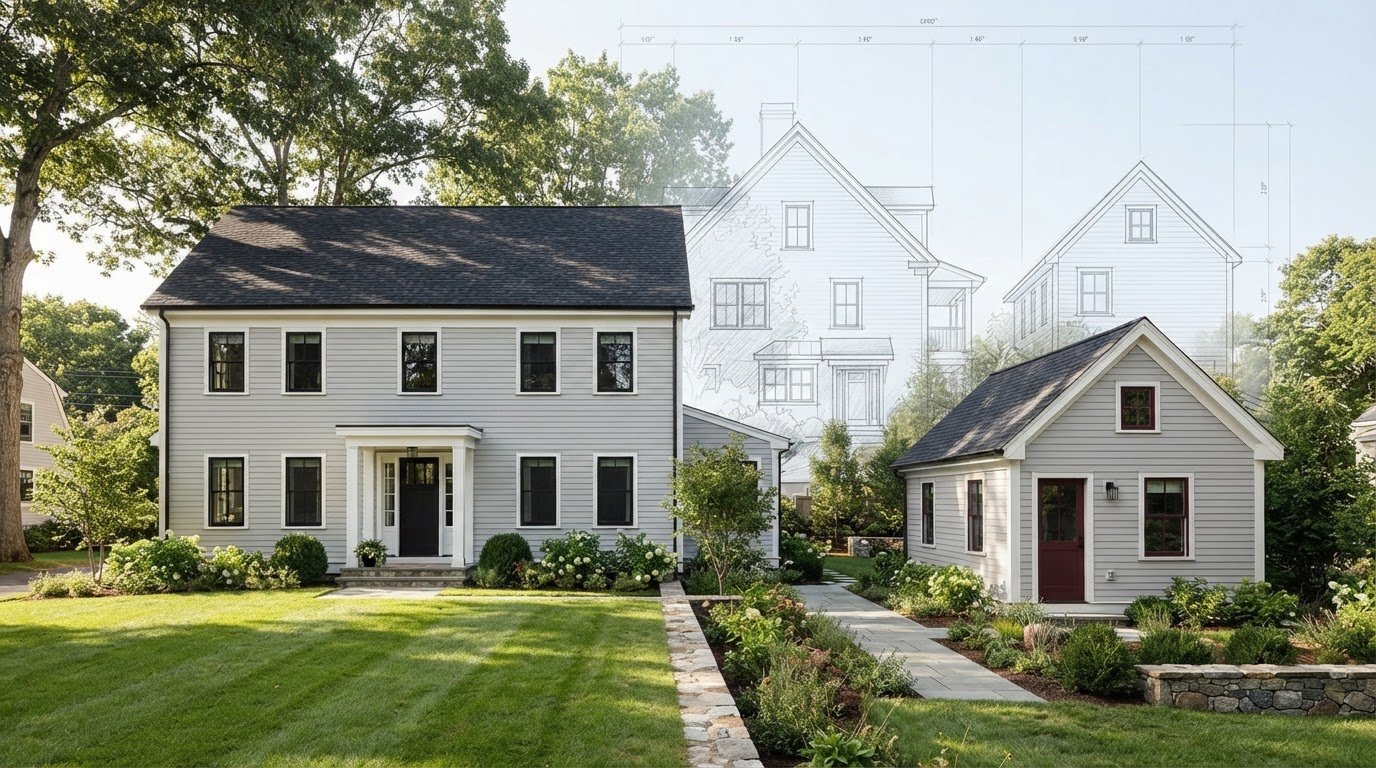
Distinctive architectural details deserve particular care. The proportions of an older home’s windows, for example, may be integral to its appearance. Replacement planning should consider how a new unit will sit within the opening and relate to visible trim and exterior finishes, alongside its performance goals. The aim is a cohesive result, not efficiency at the expense of character.
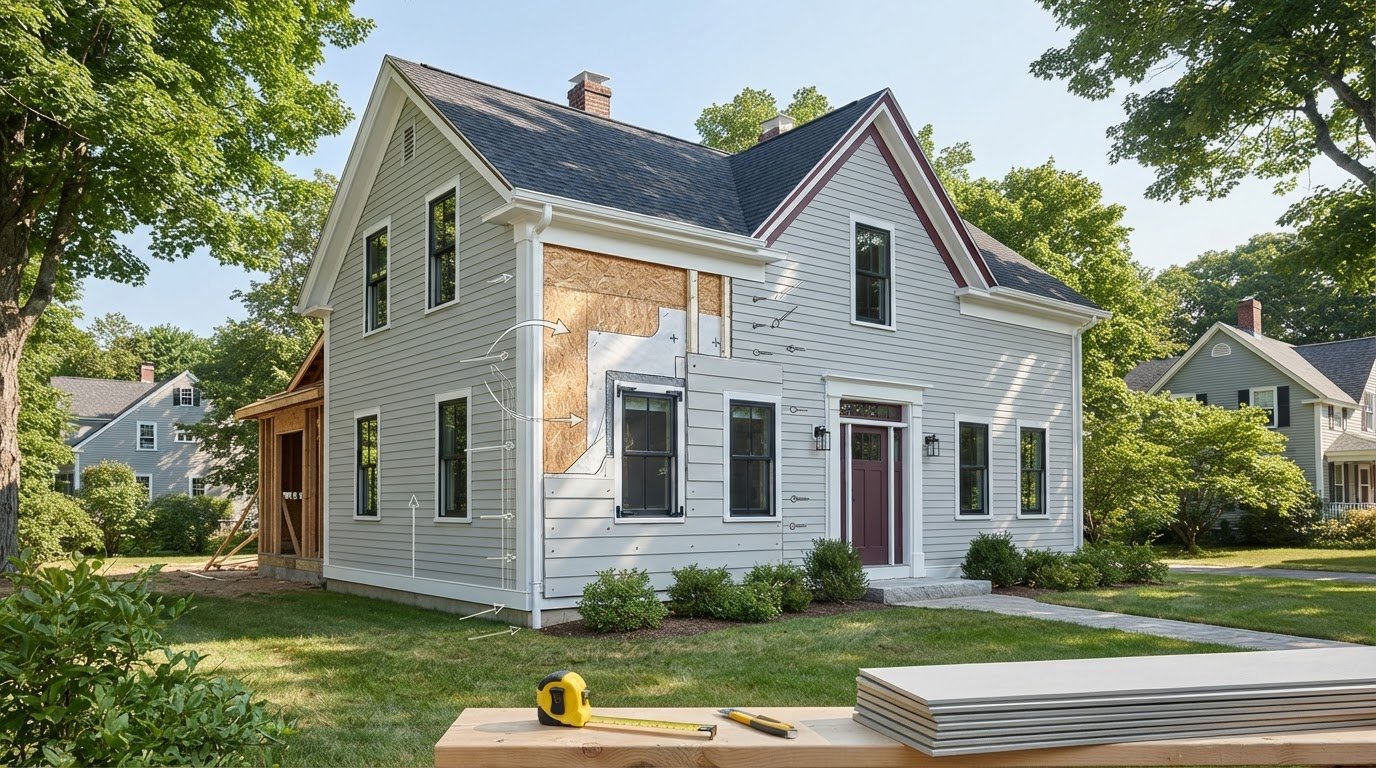
Surrounding exterior work may also affect the project plan. If siding is being replaced or updated near the windows, coordinating the scope can help account for the junction between the window and exterior finish. That coordination is relevant when the work overlaps, but it doesn’t mean every window project needs additional exterior renovations.
Turn efficiency research into a clear next step
Use your notes to frame the decision around four essentials: the comfort concern, the window’s verified ratings, a design suited to the home, and the work needed to integrate the replacement into its opening. This keeps the discussion grounded in the specific rooms and conditions you’ve observed, rather than relying on a single efficiency claim or a universal recommendation.
Remod Group provides window and door installation as part of its residential exterior construction and remodeling work for homeowners in communities including Hudson, Natick, Sudbury, Waltham, Ashland, Hopkinton, Bolton, Northborough, Southborough, Westford, Stow, Maynard, Wayland, Concord, Weston, Wellesley, Sherborn, Acton, Boxborough, Berlin, Shrewsbury, Boylston, Newton, Needham, Dedham, and Dover. A thoughtful replacement plan connects selection with fit, appearance, and execution, making the improvement part of a well-considered home envelope rather than a guaranteed savings shortcut.
For a closer look at planning your project, explore window and door installation in Boston.
Make Your Next Window Decision with Confidence
Let the next step be a clear one. Rather than trying to solve every comfort concern at once, choose the room or window that affects daily life most and use it as the starting point for a thoughtful plan. A focused project discussion can help translate what you’ve observed into decisions that suit the home’s design and how you use each space.
Choosing energy efficient windows Boston homeowners can feel good about isn’t a race toward the highest rating or the newest feature. It’s a considered investment in comfort, fit, and enduring character. Keep your notes, priorities, and design considerations close as you move from research to planning.
Remod Group offers professional window and door installation for homeowners in Boston-area and MetroWest communities. If you’re ready to explore a carefully planned replacement for your home, explore window and door installation in Boston. A well-defined next step can bring greater clarity to the project and help you move forward with confidence.
Frequently Asked Questions
Are energy efficient windows worth it in Boston?
They can be worthwhile when they address a real comfort concern and their performance suits the home, but return on investment varies. Consider more than potential energy-bill changes: improved comfort near a problem window, easier operation, and the condition of the existing units may also factor into the decision. For energy efficient windows Boston homeowners are evaluating, compare the project’s goals and scope rather than assuming a fixed payback.
Does ENERGY STAR certification guarantee the best window for my home?
No. ENERGY STAR certification indicates that a window meets program criteria for its climate zone, but it doesn’t establish that the unit is the best fit for every opening. Compare the full-window ratings and consider orientation, room use, architectural style, and operation. A certified option still needs to suit the home’s dimensions and be installed appropriately to meet your project’s comfort and design goals.
Can I improve old windows without replacing them?
Sometimes. If the units are in sound condition, suitable weatherstripping or carefully applied caulk around stationary gaps may help address air movement. Interior storm panels can also be an option in some homes. First identify where air seems to enter and whether the sash closes securely. Avoid sealing moving parts or intended drainage paths, and don’t treat a temporary measure as a solution to damaged frames or persistent moisture.
Do energy efficient windows reduce outside noise?
They may reduce some outside sound, but the result depends on the glass assembly, window construction, seals, installation, and the type of noise. Traffic rumble, voices, and high-pitched sounds can behave differently as they pass through a window. Before selecting a replacement, note when noise is most noticeable and whether it seems to come through the glass or around the frame. No ordinary window should be assumed to make a room soundproof.
Can replacement windows be installed during a Boston winter?
Winter installation can be possible, but the project approach depends on weather, the number and location of openings, access, and the work involved. Replacing one exposed window may require different planning from work spread across several rooms. Discuss how the openings and interior will be protected during the work and how conditions could affect scheduling. A project plan should account for the home’s needs, not rely on a universal seasonal rule.
Are window replacement tax credits or Mass Save incentives available in 2026?
The federal Energy Efficient Home Improvement Credit for windows expired after December 31, 2025, and Massachusetts has no state window-replacement tax credit for 2026. Mass Save offers a $75-per-window rebate for qualifying replacements of single-pane windows with ENERGY STAR Most Efficient certified windows. A home energy assessment must take place before installation, and additional conditions may apply. Review current program requirements before relying on eligibility or rebate amounts.
Do Boston historic homes need special approval for replacement windows?
Possibly, depending on the property’s location, designation, and the proposed changes. Requirements can differ between properties, so don’t assume a replacement that preserves the opening or appearance is automatically exempt from review. Before finalizing window selections or project scope, identify whether local historic-district or preservation rules apply and account for any required review in your planning. This is especially important when changing visible proportions, materials, or exterior details.
Comments