
How to Choose a Remodeling Contractor in Massachusetts: 2026 Guide

The lowest remodeling bid may be the least useful if it leaves important work undefined. If you’re wondering how to choose a remodeling contractor, start with project fit and a clear written scope, not the bottom line alone. Proposals can rely on different material assumptions, exclusions, and descriptions of the work, making a direct price comparison misleading.
It’s reasonable to want confidence in the workmanship, communication, and decisions that shape your project. A structured comparison helps you assess relevant experience, understand what each proposal includes, and identify unanswered questions before work begins. This guide lays out a project-first process for Massachusetts homeowners, from narrowing the field to reviewing scope, materials, credentials, and contract details. Whether you’re planning a kitchen or bathroom remodel, a custom deck, or exterior work such as siding, roofing, or window and door installation, look for a partner whose experience and written plan align with your home and priorities. That gives you a clearer basis for comparing proposals and discussing the project.
Table of Contents
How to Choose a Remodeling Contractor: Start With Your Massachusetts Project
Choosing a remodeling contractor means matching your project’s needs with relevant experience and a clearly documented scope. Begin with the work itself, not a broad title or an attractive portfolio. A focused renovation, such as updating a bathroom, has different demands from a coordinated project spanning several rooms or combining interior and exterior work.
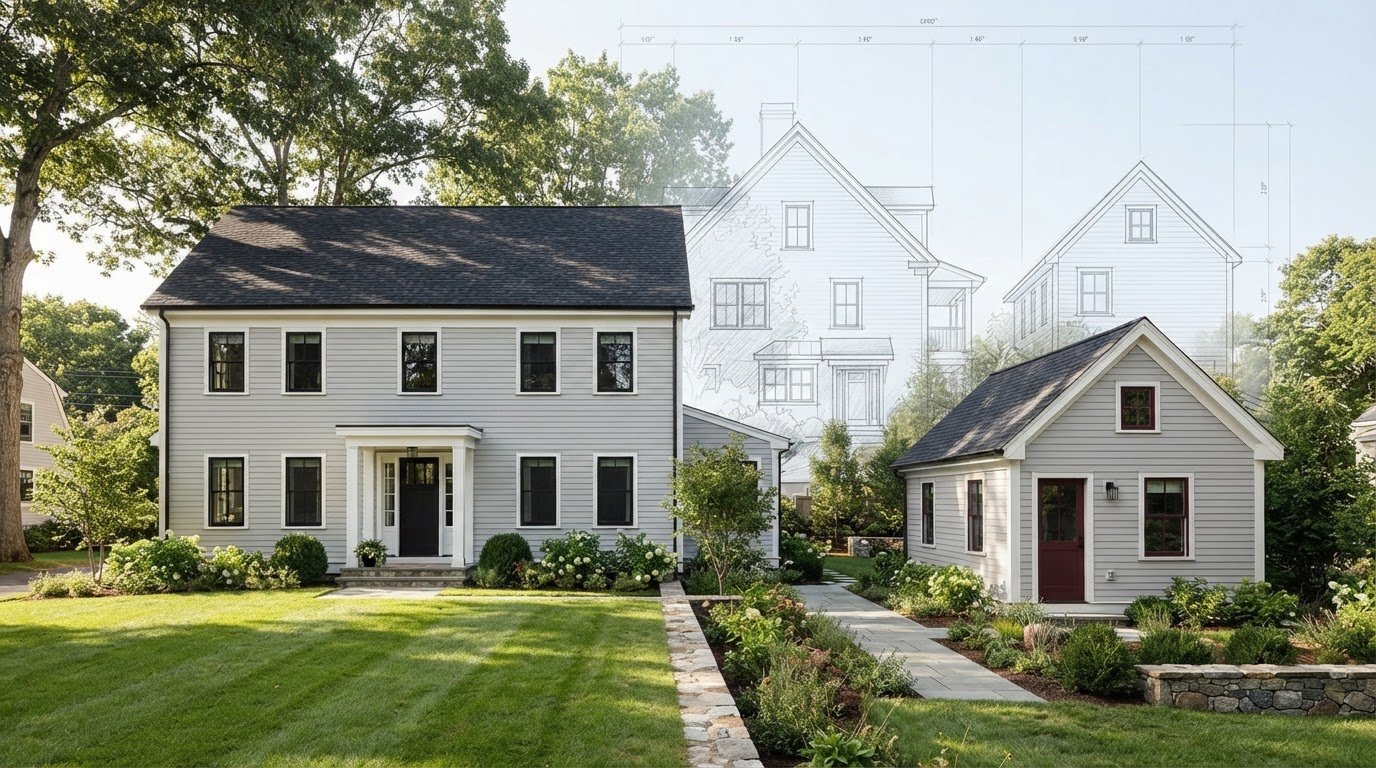
For example, a kitchen remodel may center on layout, finishes, and day-to-day function. A broader project could combine kitchen remodeling with window and door installation or other exterior improvements, requiring a wider scope. A general contractor may coordinate multiple aspects of construction; the General Contractor Overview describes the role and its responsibilities. The title alone, however, doesn’t show whether a contractor has completed work like yours.
Before comparing candidates, clarify what matters most to your household. Consider how the finished space should function, the level of finish you expect, the durability you want from materials, and how construction may affect daily routines. A practical plan helps you separate essential requirements from preferences that could change.
Function: What should the space let your household do more easily?
Finish: Which design details are essential, and which are flexible?
Durability: Where do you value long-lasting materials or performance?
Disruption: Which areas or routines will be affected during the work?
Define the work before searching for a remodeling contractor
Write down your must-haves, then separate aesthetic preferences from options that could wait for a later phase. Identify the project category: kitchen or bathroom remodeling, deck construction, roofing, siding, or window and door installation. This description helps you look for comparable experience instead of comparing contractors against different assumptions.
Record existing conditions that could shape the scope, including the parts of the home involved, access to the work area, and known concerns with surfaces or structure. You don’t need to resolve every technical question in advance. Give a clear starting picture and note decisions that may affect the plan.
Match the contractor’s experience to the project
Project-specific experience offers stronger evidence of fit than a generic list of services. A contractor who has completed bathroom remodels can show work relevant to that type of renovation, while a deck project calls for evidence tied to exterior construction. Look for comparable completed projects and, where available, review their photos, materials, and scope.
Consider the scale and coordination your plans require, too. Full-scale remodeling or exterior construction differs from a small repair, handyman task, or standalone trade assignment. Keep your comparison focused on the work you intend to complete. A contractor’s broad title matters less than relevant finished work, a scope that reflects your priorities, and a clear understanding of the project’s demands.
Evaluate a Remodeling Contractor’s Experience, Work, and Massachusetts Credentials
Once you’ve defined the project, look for evidence of comparable work, not just a broad claim of experience. A useful review combines completed projects, references, consistent business information, and credentials that apply to the work. For homeowners learning how to choose a remodeling contractor, these details turn an initial impression into a more grounded assessment.
Relevant workmanship is demonstrated by comparable finished projects, not by a general claim of experience. A polished kitchen photo may show the overall look, but finish transitions, material choices, and how the work fits the home can offer a fuller picture. The most useful examples resemble your project in type, scale, materials, and existing conditions.
Review comparable projects and references
Look at completed work in the category you’re planning, whether that’s a bathroom remodel, custom deck, roof, siding, or window and door installation. When available, review more than one image: broad views show the overall result, while close-ups can reveal workmanship at edges, joints, and transitions. Consider whether the project’s scale and materials match your priorities.
References can add context that photographs can’t. Use them to learn about communication, how project questions were handled, and the homeowner’s experience of the work. One person’s account is useful evidence, not a guarantee of how every project will unfold. Check that the contractor’s business identity is consistent across the proposal and other written materials, so you know which business is responsible for the work.
Check Massachusetts credentials and local project context
Credential requirements can depend on the project’s scope. Use current guidance from authoritative Massachusetts sources to determine what registration, licensing, or insurance requirements apply to the work. Official state resources, including the Office of Consumer Affairs and Business Regulation and the Office of Public Safety and Inspections, can help you verify current information. Focus on credentials relevant to your project.
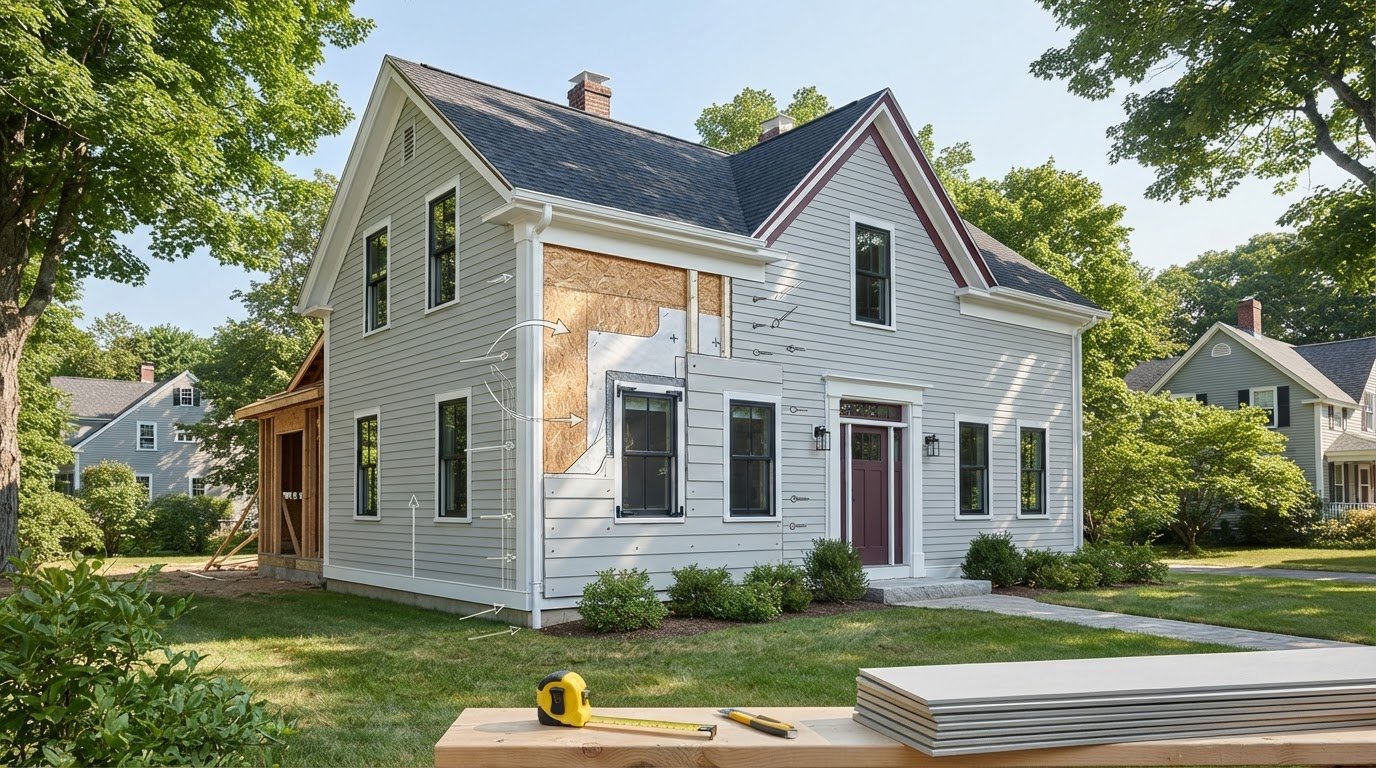
Local conditions matter, especially for exterior construction. Decks, roofing, siding, and windows are exposed to New England weather, including rain, snow, and changing temperatures. Consider how comparable work reflects the demands of exterior exposure and conditions in the area. A portfolio with careful detailing across relevant projects offers more useful insight than a broad promise of quality.
Use a compact checklist as you review your shortlist:
Comparable work: Project type, scale, materials, and home conditions.
Visible details: Overall appearance and close-up finish quality.
References: Communication and project experience, considered as individual accounts.
Business identity: Consistent information in written materials.
Applicable credentials: Requirements verified through current Massachusetts sources.
For homeowners planning substantial interior remodeling or exterior construction in the MetroWest area, Remod Group’s remodeling and exterior construction work includes kitchens, bathrooms, decks, roofing, siding, and window and door installation.
Compare Remodeling Contractor Proposals on Scope, Materials, and Assumptions
A proposal is useful only if you can tell what the contractor intends to deliver. Before comparing totals, check whether the documents describe the same work, materials, and responsibilities. A lower figure may reflect a narrower scope, different product assumptions, or work left to the homeowner. Aim for an equivalent comparison, not simply a ranking by price.
For each proposal, create a side-by-side record. Note what’s included, what’s excluded, and what remains uncertain. If a description uses broad phrases such as “standard installation” or “complete renovation,” mark it for clarification. Those words can sound definitive while leaving important details open.
Work scope: Compare preparation, removal, installation, and finishing. For a window project, check whether each description covers removal of existing units, installation of replacements, and finishing around the openings.
Materials: Record product names, materials, sizes, and finish details where stated. Similar labels don’t necessarily mean equivalent specifications, so flag descriptions that don’t identify what’s proposed.
Allowances: Note any budget allowances for selections or materials and what they cover. Don’t treat an allowance as a fully specified product choice.
Exclusions and owner responsibilities: Identify work the proposal leaves out and tasks assigned to you. A missing item can make a proposal appear less expensive without representing a true saving.
Schedule assumptions: Capture any stated start or completion estimates and the conditions they depend on. Treat them as assumptions to understand, not as a guaranteed finish date.
Written terms: Check that the agreement describes the approved scope and explains how proposed changes will be documented and approved.
Compare equivalent scope instead of headline totals
Read each document line by line against your project notes. One kitchen proposal might describe removal, installation, and finishing in detail, while another names only the finished result. That difference matters. Unclear work should be described in writing before you compare the proposals as if they cover identical tasks.
Mark each item as included, excluded, allowance-based, or unclear. This simple notation reveals gaps quickly and gives you a focused record of differences that could affect the finished work or your responsibilities.
Understand changes, schedule assumptions, and written terms
Read the change language carefully. The written agreement should make clear how an adjustment to the approved work is described and recorded, rather than leaving you to rely on a verbal understanding. Review schedule wording in the same way: note stated assumptions and dependencies without treating an estimate as a promise.
For more prompts to use as you review proposal details, consult this questions to ask a remodeling contractor checklist. Use it to identify open points that deserve a clear written answer before you commit.
This makes how to choose a remodeling contractor more practical: align the scope first, understand the assumptions next, then weigh proposals by what they actually include.
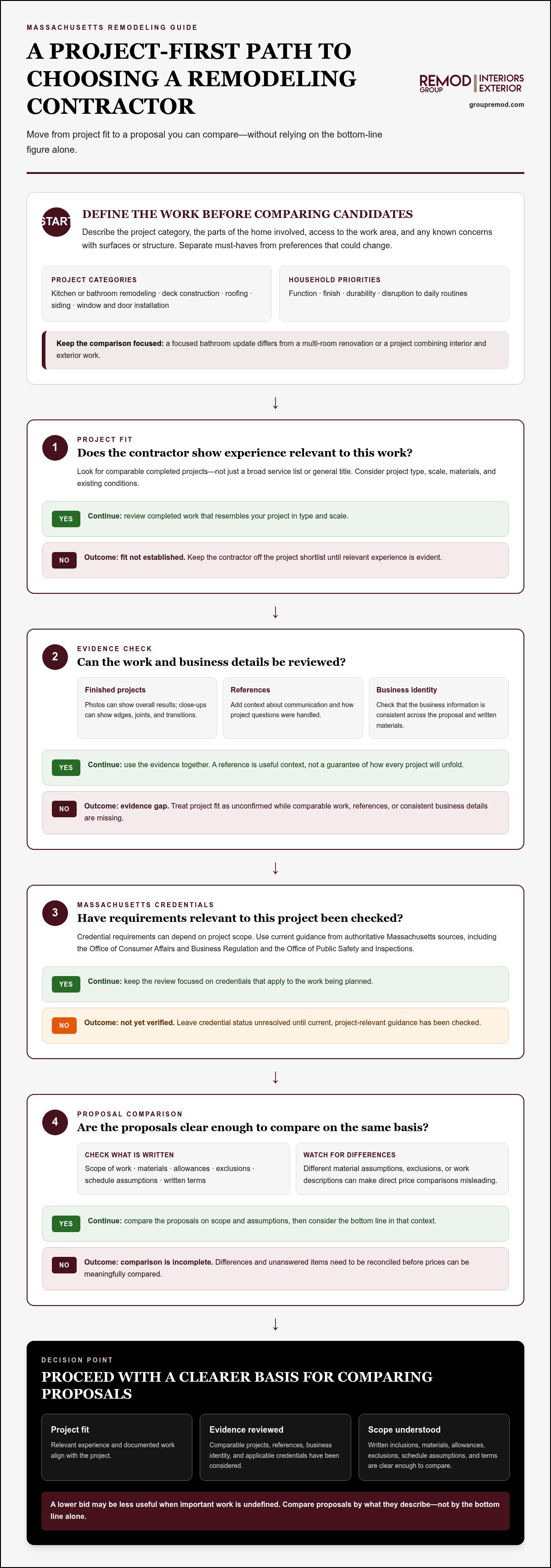
Make a Confident Contractor Decision for a New England Home
A confident choice comes from resolving important unknowns, not from being impressed by the lowest proposal or the broadest promise. Ground your decision in the work you need, the evidence you’ve gathered, and the written agreement. A simple sequence helps you move from a crowded shortlist to a clear decision without relying on memory or pressure.
Shortlist: Keep candidates whose experience aligns with the project type and scale.
Verify evidence: Review comparable work, references, business identity, and applicable requirements.
Reconcile scope: Compare what each proposal includes, excludes, and assumes.
Resolve open items: Get unclear materials, responsibilities, or terms addressed in writing.
Decide: Select the partner whose demonstrated fit and documented plan best serve your priorities.
Use a consistent scorecard to compare finalists
Give each finalist the same review categories: project fit, comparable work, proposal clarity, communication, and documented requirements. Use a simple rating scale or written notes, and record the evidence behind each assessment. List unresolved questions beside the relevant category so an attractive overall impression doesn’t hide a gap. A scorecard supports your judgment; it doesn’t replace reading and understanding the agreement.
Pay attention to patterns. A contractor may show strong relevant work but leave a material choice or responsibility unclear. Another proposal may read clearly yet show less evidence of comparable projects. Use these differences to identify open items, then reassess once they’ve been resolved. This guide to home remodeling mistakes to avoid covers related planning pitfalls.
Account for Massachusetts home and exterior conditions
For decks, roofing, siding, windows, and doors, consider how seasonal exposure may affect the work and material choices. Rain, snow, and temperature changes are part of the New England context, but they don’t point to one universal material or construction answer. Keep the decision specific to your home, project scope, and stated specifications.
Requirements can also vary with the project. Verify current registration, licensing, insurance, and local permit guidance through authoritative Massachusetts and municipal sources rather than assuming the same rules apply to every job. If exterior work spans several parts of the home, use a broader planning lens; this Massachusetts full home exterior renovation guide can help frame that coordination.
Ultimately, how to choose a remodeling contractor comes down to a well-matched project, credible evidence, and terms you understand. Remod Group’s remodeling and exterior construction services cover kitchens, bathrooms, decks, roofing, siding, windows, and doors.
Plan Your Remodeling Project With a Contractor That Fits the Work
Research is most useful when it leads to a focused conversation about the work you want done. Before reaching out, turn your ideas into a short project brief: describe the areas involved, what you want to improve, and which outcomes matter most. This gives the conversation a clear starting point and helps establish whether the work aligns with the contractor’s experience.
For a Newton home, priorities might include improving how a kitchen functions, updating a bathroom, or planning exterior construction. You don’t need every finish or detail selected in advance. A clear picture of the project’s purpose, boundaries, and essential decisions is enough to begin discussing fit.
Match your project to Remod Group’s remodeling services
Remod Group focuses on substantial remodeling and construction work, including kitchen and bathroom remodeling, custom deck construction, roofing, siding, and window and door installation. Start with the specific work you’re planning, then describe whether it’s a focused renovation or a broader project involving more than one area. Naming the project clearly keeps the discussion centered on relevant scope rather than a general wish list.
Remod Group serves Massachusetts communities including Hudson, Natick, Sudbury, Waltham, Ashland, Hopkinton, Bolton, Northborough, Southborough, Westford, Stow, Maynard, Wayland, Concord, Weston, Wellesley, Sherborn, Acton, Boxborough, Berlin, Shrewsbury, Boylston, Newton, Needham, Dedham, and Dover. Its work spans interior remodeling and exterior construction. If your plans include more than one category, such as siding and window installation, outline how you see the work fitting together. That context helps frame the project without assuming every detail is already settled.
Prepare for a productive first project conversation
Bring concise, useful information. A few notes or photographs can communicate more than a long list of possibilities. Organize your preparation around these points:
Project priorities: State what you want to improve and what matters most in the finished space.
Known constraints: Note access considerations, areas that must remain usable, or existing conditions you already know about.
Inspiration: Share images or examples that explain your preferences, distinguishing visual references from required specifications.
Scope questions: Identify decisions you haven’t made and parts of the work you want to understand more clearly.
This preparation makes the initial discussion concrete. It helps the contractor understand the work under consideration, the priorities shaping it, and where more detail may be needed to define the scope. It also gives you a basis for assessing whether the conversation stays focused on your project rather than broad promises.
Choosing how to choose a remodeling contractor is ultimately about turning research into a clearly described project suited to the right kind of work. Explore Remod Group’s remodeling services to see how its interior remodeling and exterior construction categories align with your plans.
Turn Your Remodeling Plans Into a Clear Next Step
The best project conversations begin with a clear sense of what you want your home to do better. Set down your priorities, the changes you’re considering, and any decisions that remain open. This gives you a practical starting point for discussing project fit and moving from ideas toward a defined plan.
If you’re deciding how to choose a remodeling contractor, focus on a partner whose work aligns with the scale and nature of your plans. Remod Group provides full-scale interior remodeling and exterior construction for homeowners in Hudson, Natick, Sudbury, Waltham, and surrounding MetroWest communities. That local presence offers a starting point for a project conversation grounded in the needs of Massachusetts homes.
Explore Remod Group’s remodeling services and bring your priorities to the project conversation. A well-defined project starts with a thoughtful first step.
Frequently Asked Questions
How do I choose a remodeling contractor for my home?
To choose a remodeling contractor, start with the work your home needs, then look for evidence of similar completed projects. For a Newton kitchen remodel, for example, compare experience with kitchen work rather than relying on a broad service description. Review references, business details, applicable credentials, and written scopes. Compare proposals once you understand what each includes, and resolve unclear responsibilities before making a decision.
What should I compare when reviewing remodeling contractor estimates?
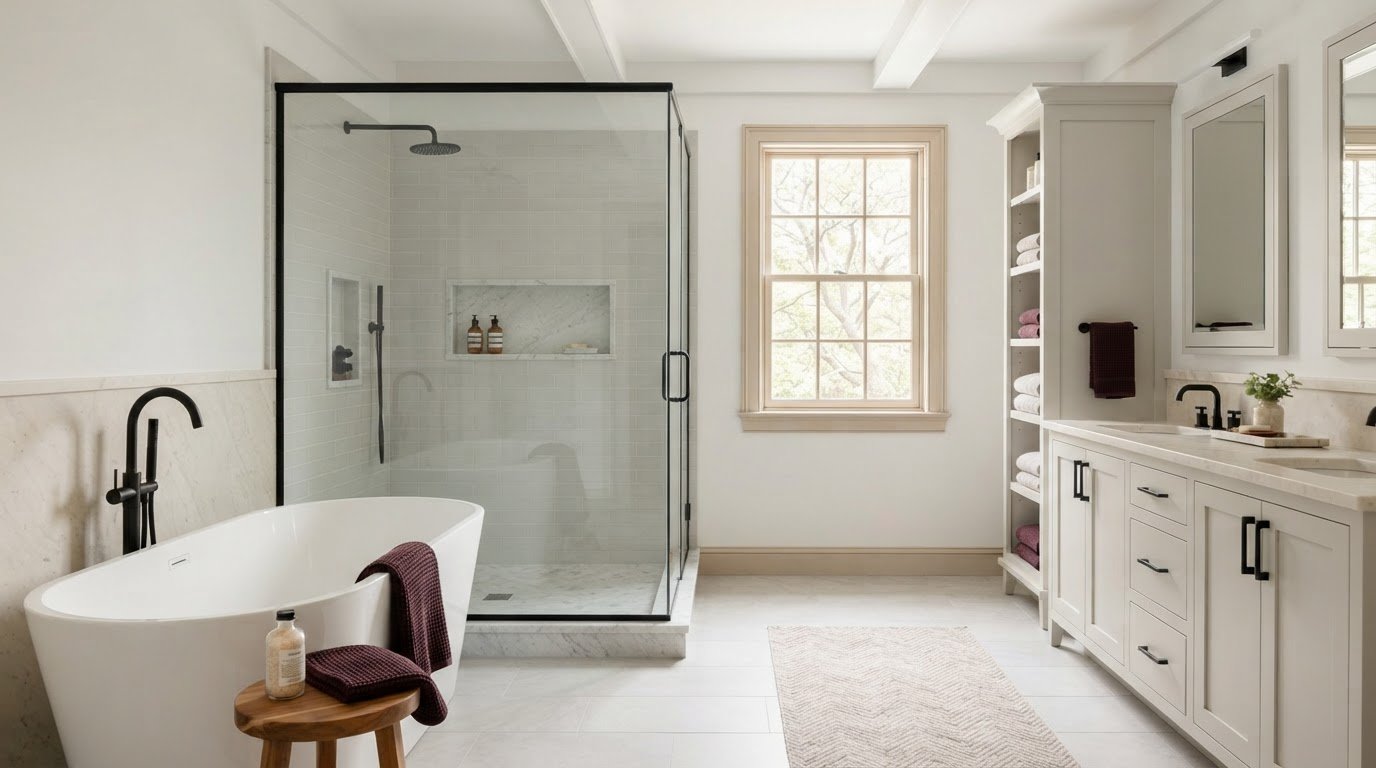
Compare whether each estimate describes the same tasks and specifications, not just whether the totals look similar. For a bathroom project, check preparation, removal, installation, finishing, named materials, and any allowances for selections. Mark exclusions and owner responsibilities, then note assumptions about access or scheduling. Review how the written terms describe the agreed work and changes. These details reveal where estimates differ without relying on market-price comparisons.
Is the lowest remodeling contractor bid the best choice?
Not necessarily. A lower total may reflect a narrower scope, different material specifications, or work assigned to the homeowner. For example, one Newton siding proposal may include related finishing tasks that another leaves out. Compare the documents line by line and have unclear differences explained in writing before choosing. The better fit is the proposal that clearly reflects the work you need and the terms you understand.
How can I verify a remodeling contractor’s experience?
Look for completed work that matches your project’s type and scale, then use references to learn about the homeowner’s experience. If you’re planning a deck, a portfolio of interior rooms alone won’t show comparable deck work. Review business details across the proposal and other materials, and verify credentials that apply to the project. Photos can show appearance, while close views and detailed project descriptions may offer a better sense of workmanship.
What credentials should a remodeling contractor have in Massachusetts?
There isn’t one credential checklist that applies identically to every remodeling project. Relevant registration, licensing, or insurance requirements can depend on the work and its scope. For a Newton home, consult current guidance from official Massachusetts sources, such as the Office of Consumer Affairs and Business Regulation or the Office of Public Safety and Inspections. Verify which requirements apply to your specific project rather than relying on a general claim.
Can one contractor handle both interior remodeling and exterior construction?
Yes, a contractor may take on both types of work, but assess demonstrated experience in each area you plan to include. A project combining a kitchen remodel with window installation, for instance, calls for a clear description of both scopes and how each will be addressed. Review the written agreement so responsibilities, materials, exclusions, and coordination between work areas are documented rather than assumed.
How many remodeling contractor estimates should I get?
There’s no single number that fits every project. The goal is to gather enough comparable proposals to understand differences in scope, materials, and assumptions without collecting estimates that describe entirely different work. In Massachusetts, a project involving several exterior areas may need especially clear specifications before proposals can be meaningfully compared. If estimates vary widely in detail, refine the project description first, then assess which written plans best match your priorities.
Comments