
Increase Home Value with Remodeling: A 2026 Homeowner’s Guide

Updated: Oct 19
The biggest renovation isn’t always the smartest way to increase home value with remodeling. In MetroWest, an improvement that fits your home’s condition and the expectations of nearby buyers may make more sense than a sweeping project that stretches your budget. It’s reasonable to wonder which upgrades buyers will notice, whether the investment will pay off, and which styles may soon feel dated.
Start with your priorities, not the project size. This guide explains how to compare your home with nearby properties, weigh interior and exterior improvements, and choose durable work that supports everyday comfort as well as future appeal. A clear scope matters more than chasing trends or renovating every room. Remod Group provides full-scale interior remodeling and exterior construction, including kitchens, bathrooms, decks, roofing, siding, and window and door installation.
Table of Contents
How Remodeling Can Increase Home Value, and Where Returns Vary
Remodeling can affect a home’s value in several ways. It may improve resale appeal, make rooms work better, address visible wear, or create a more comfortable daily experience. These benefits matter, but they aren’t measured in the same way. A more functional kitchen can make family routines easier; a well-maintained exterior can create a stronger first impression. Neither benefit alone establishes what a future buyer will pay.
It helps to distinguish market value from personal value. Resale value is influenced by comparable properties and buyer demand when a home is offered for sale. Enjoyment, convenience, and reduced maintenance concerns matter to the people living there, but may not translate directly into a higher sale price. A broad overview of Renovation (also called remodeling) illustrates the range of reasons homeowners undertake improvements, from practical needs to changing how a space is used.
Remodeling ROI is the value gained from a project compared with its cost, and the result depends on the home and market rather than a promised return. A homeowner may spend on a feature they love without recovering the full expense at resale. Work that restores function or addresses a concern may help protect a home’s appeal without producing a clearly measurable price increase.
What does it mean for remodeling to add home value?
To assess whether a project could support resale, compare similar homes in the same neighborhood. Look at their condition, layout, and features, and note which improvements appear consistently. These comparisons offer context, not a guarantee. Buyers may value an upgrade differently depending on their needs, the home’s overall presentation, and what else is available when they shop.
For your own decision, weigh potential resale appeal alongside everyday usefulness and the maintenance concerns the work may address. These are separate benefits, and a project can deliver one more strongly than another.
Why the same renovation can perform differently
A project’s fit matters. The neighborhood’s price range and the features of nearby comparable homes can help define a reasonable scope. A substantial renovation that feels out of step with surrounding properties may be harder to justify for resale. A focused improvement that brings a home closer to local expectations may make more sense.
Condition matters, too. If an exterior has deteriorated or a room no longer functions well, addressing that issue may be more pressing than changing a finish for appearance alone. Buyer preferences and timing shift, while workmanship affects whether an improvement feels cohesive and durable or creates visible inconsistencies.
For MetroWest homeowners, the practical question isn’t simply whether remodeling can increase home value, but whether a specific project suits the property, the neighborhood, and your plans. Consider the home as a whole: condition, function, finishes, and the quality of the completed work. This keeps expectations grounded while allowing for improvements that enhance daily life, future market appeal, or both.
Which Remodeling Projects Can Strengthen a Home’s Appeal?
Projects support a home’s appeal in different ways. Interior remodeling can improve how rooms function and feel, while exterior work shapes first impressions and addresses visible wear. The right choice depends on what the property needs, how long you plan to stay, and whether you’re resolving a concern or making a personal upgrade. No category guarantees a resale premium. Thoughtful scope and cohesive execution matter.
Interior remodeling: kitchens and bathrooms
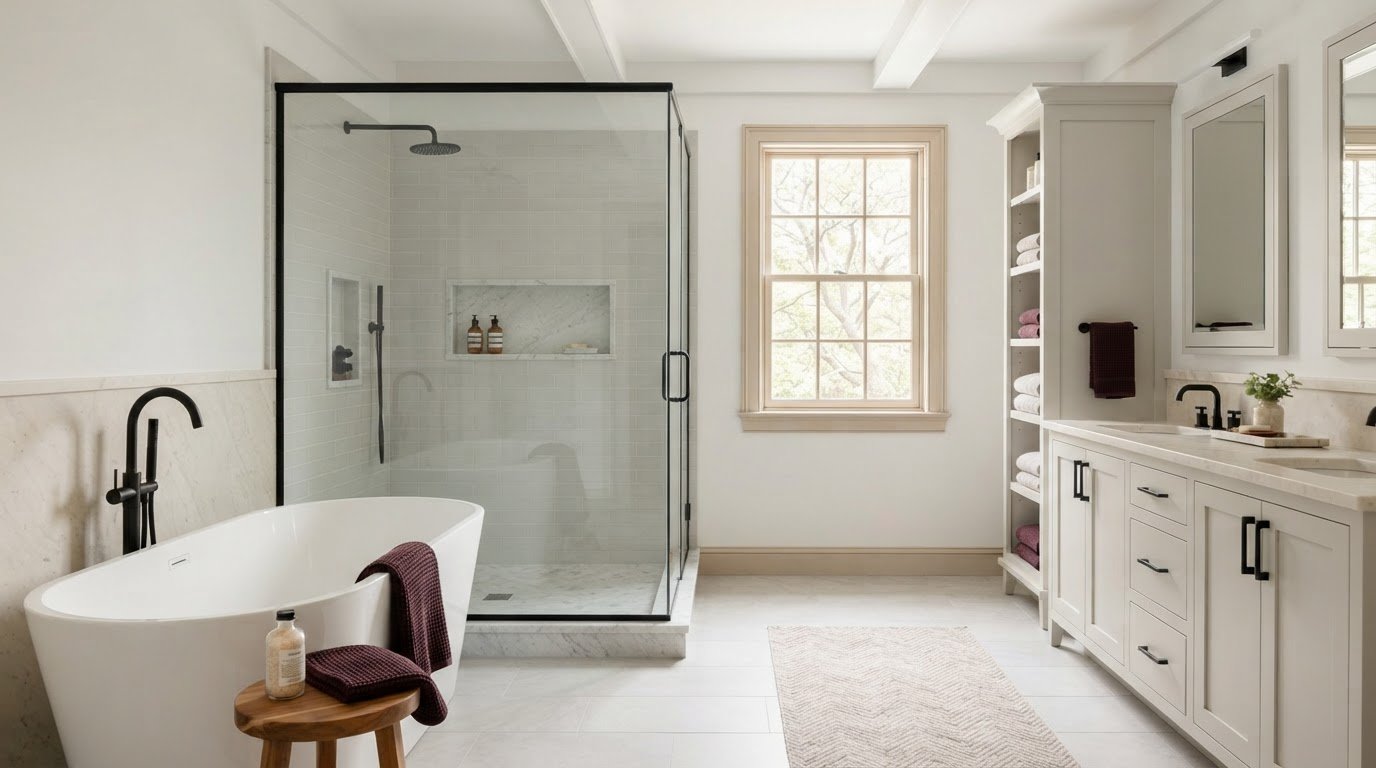
Buyers often notice how easily a kitchen or bathroom supports daily routines. Consider circulation, storage, usable counter space, lighting, and the condition of surfaces and fixtures. A focused update may address worn finishes or improve storage without changing the room’s layout. A more extensive renovation may make sense when the existing space has persistent functional limitations. Neither scope is automatically the better investment; let the home’s condition and your goals guide the decision.
For a bathroom project, consider layout, finishes, and overall scope together. Remod Group’s bathroom remodeling guide for Massachusetts homeowners offers more detail on planning a renovation. The Remodeling Impact Report from the National Association of Realtors can help distinguish homeowner satisfaction from potential resale value, rather than treating them as interchangeable outcomes.
Exterior remodeling: decks, roofs, siding, windows, and doors
A deck can extend usable living space and create a natural connection between the home and outdoors. Its value to a homeowner may come from function and enjoyment; its contribution to buyer appeal depends on its condition, design, and fit with the property. The same applies to the exterior as a whole. A roof, siding, windows, or doors that appear worn or inconsistent can affect a buyer’s first impression, while coordinated improvements can make the home feel cared for. For projects aiming to maximize natural light and architectural flow, exploring systems from Structural Glass Design Ltd—such as rooflights and glass links—can also provide inspiration for connecting living spaces seamlessly.
Massachusetts weather makes durability a practical consideration. Seasonal exposure can affect exterior materials over time, so weigh expected upkeep as well as appearance. Durable, well-planned work can support the home’s condition and reduce maintenance concerns, but it doesn’t guarantee a higher sale price. For guidance on material choices and project planning, explore the Massachusetts siding installation guide.
Maintenance-led remodeling addresses condition or function; preference-led remodeling reflects how you want the home to look and feel. Both can be worthwhile, but they answer different needs. If you’re weighing how to increase home value with remodeling, identify which need comes first, then choose a scope that improves the home without overbuilding for your plans or neighborhood. Remod Group provides kitchen and bathroom remodeling, deck construction, roofing, siding, and window and door installation. Explore Remod Group’s remodeling projects to consider how these improvements can fit into a cohesive plan.
How to Judge Remodeling Value in Massachusetts and MetroWest
A project that looks compelling in a national return-on-investment ranking may not be the right priority for a home in Hudson, Natick, Sudbury, or Waltham. Local housing styles, property condition, and buyer expectations shape what feels appropriate. To judge whether a project could help increase home value with remodeling, start with nearby evidence, then weigh the home’s actual needs against the improvement you’re considering.
How local comparable sales shape project scope
Look at recent sales of homes similar in property type, size, location, and condition. Note which features appear consistently, where homes differ, and whether the properties you’re comparing have updated interiors or exteriors. A renovated home in a different neighborhood or price range may offer context, but it isn’t a direct template. Aim for a scope that brings your home into alignment with local expectations instead of adding features nearby buyers may not value.
Published ROI figures can help identify broad patterns, but they don’t forecast what a specific MetroWest home will sell for. A ranking can’t account for the home’s starting condition, the quality of execution, or the comparable properties available when it goes to market. Treat those figures as directional evidence, not a promise.
What Massachusetts homeowners should consider
Exterior condition deserves a seasonal lens. Snow, rain, temperature changes, and other exposure can affect how roofs, siding, windows, doors, and decks look and perform over time. Consider visible wear, expected maintenance, and how each component fits the home’s exterior. Coordinated improvements can make the result feel deliberate and cohesive. Remod Group serves homeowners in Hudson, Natick, Sudbury, Waltham, Ashland, Hopkinton, Bolton, Northborough, Southborough, Westford, Stow, Maynard, Wayland, Concord, Weston, Wellesley, Sherborn, Acton, Boxborough, Berlin, Shrewsbury, Boylston, Newton, Needham, Dedham, and Dover. For broader planning, Remod Group’s full home exterior renovation guide explores how exterior projects work together.
Before committing to exterior or structural work, check the relevant municipality’s building department and official Massachusetts resources for applicable permit or historic-district requirements. Requirements can vary by location and project. If you’re also researching how to fund improvements, U.S. Department of Housing and Urban Development (HUD) resources for home improvements provide information on federal programs and avoiding fraud.
Separate immediate condition concerns from optional upgrades, then use the comparison below to organize what to investigate. This helps keep resale assumptions distinct from functional benefits.
Use what you find to set a measured scope: resolve pressing condition issues first, then consider discretionary improvements that suit your plans and the neighborhood. Remod Group’s Massachusetts remodeling projects bring interior and exterior options into view as you shape that plan.
How to Prioritize Remodeling Before You Commit
A sound remodeling plan starts with your home and household, not a trend or ranked project list. Are you preparing to sell soon, planning to stay for years, or adapting the home for a changing routine? Your timeline affects which benefits matter most. So does disruption: a project that makes daily spaces unavailable may be harder to manage during a busy season or before a planned sale.
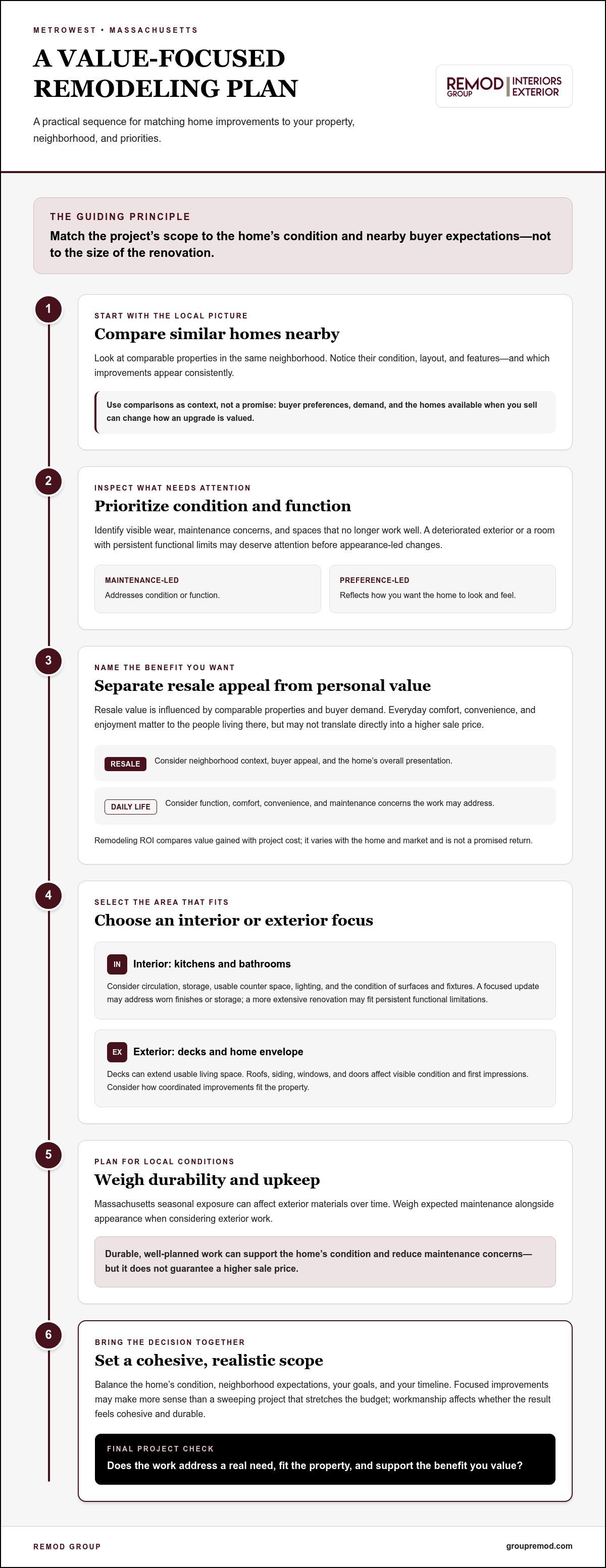
Use this sequence to turn possibilities into priorities. It helps separate pressing needs from upgrades you can schedule around your goals.
A practical order for evaluating renovation ideas
Document the home’s condition and your goals. Record visible wear, areas that don’t function well, and known maintenance needs. Note which rooms or exterior areas affect everyday use, then clarify your timeline and whether resale, comfort, or both are driving the project.
Compare project ideas with local context. Look at similar nearby homes and note their condition, features, and presentation. If a sale is on the horizon, consider which visible issues could shape a buyer’s impression and how much time you have to complete the work. If you plan to stay, give more weight to how the improvement will support your routines.
Set the scope and assess the trade-offs. For each project, define what needs to change and what can remain. Consider how the work could improve use, appearance, or upkeep, along with disruption to the household. A targeted kitchen update, for example, may address storage and worn finishes, while a more extensive renovation may suit a layout that limits function. Let the home’s needs determine the scope.
Build a coherent plan instead of chasing trends
Choose durable, broadly appealing decisions if resale is a priority, and reserve highly personalized finishes for features you can enjoy without relying on a future buyer to share your taste. The aim isn’t to make every home look alike. It’s to create a considered result that fits the property and its setting.
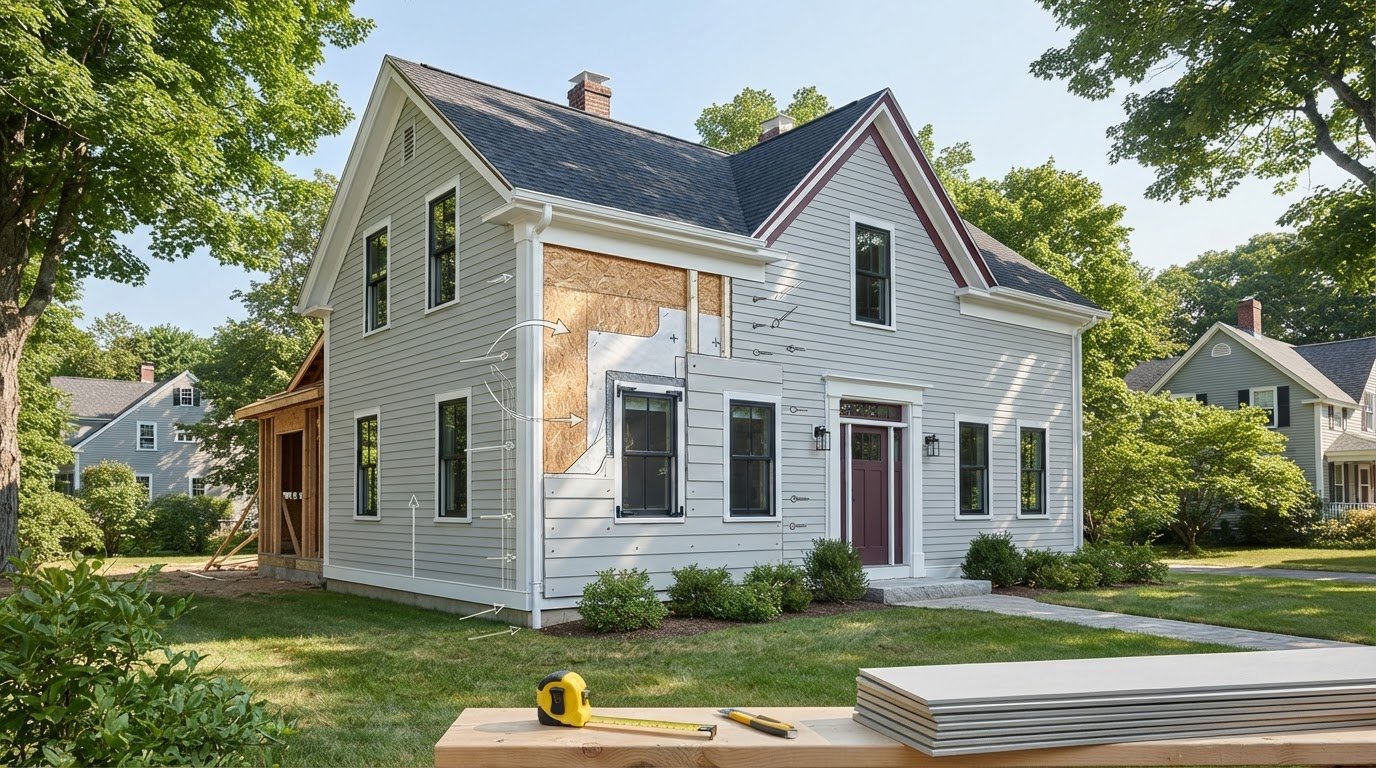
Sequencing matters, too. If roofing, siding, windows, or doors are under consideration, assess how related exterior work can be planned together. Coordinating projects may reduce repeated disruption and help the finished exterior feel unified. Consider a deck alongside the home’s exterior presentation if both are part of the same broader plan. Remod Group’s full-home exterior renovation planning guide offers a framework for thinking through connected improvements.
Keep a short list divided into three categories: needs to address, improvements that support your goals, and optional changes. Revisit it against your timeline and the comparable homes you’ve reviewed before committing. This helps you increase home value with remodeling while keeping the work aligned with how you intend to use the property.
Explore Remod Group’s remodeling options, including kitchen and bathroom remodeling, decks, and exterior construction.
Plan Value-Focused Remodeling with Remod Group
Once you’ve clarified your priorities, turn them into a project scope that fits the property. Remod Group provides full-scale interior remodeling and exterior construction for homeowners in MetroWest. The goal is not to promise a particular resale outcome, but to plan durable improvements around how you use the home, its condition, and your longer-term plans.
Interior and exterior projects under one remodeling plan
A kitchen or bathroom renovation can improve the experience of living indoors, while custom deck construction can make outdoor space more usable. Roofing, siding, and window and door installation address other parts of the home’s character: its protection, condition, and visible presentation. Each project has a distinct purpose, but related improvements can be considered together so choices feel consistent across the property.
For example, a homeowner planning exterior work can consider how new siding relates to the appearance of windows and doors, rather than treating each element as an isolated decision. A kitchen remodel and a bathroom remodel can also be evaluated as separate scopes, with priorities guided by the home’s needs and household plans. Coordination doesn’t mean doing everything at once. It means understanding how decisions connect, then choosing a scope that feels cohesive and manageable.
Remod Group’s work spans kitchens, bathrooms, decks, roofing, siding, and windows and doors. This range of interior and exterior projects lets homeowners think beyond a single room and consider how function, durability, and curb appeal contribute to the home as a whole.
Turn a value goal into a considered project scope
Start by identifying your primary goal. Are you improving everyday livability, addressing the home’s condition, or preparing for a future sale? You may care about all three, but naming the leading priority helps determine what belongs in the project and what can wait. A household planning to stay may choose features around its routines, while a homeowner focused on resale may give more weight to condition and broad appeal.
Next, connect that goal to the property itself. Consider the home’s current state, the surrounding neighborhood, and how much change the project needs to deliver. A carefully defined scope can avoid unnecessary work while still addressing the improvements that matter most. That is a practical way to increase home value with remodeling without treating the largest renovation as the automatic best choice.
For a major project, a conversation with the Remod Group remodeling team can be a useful next step. Share what you want the home to do better, which condition concerns matter, and how the project fits your plans. The scope can then take shape around the property and your priorities, without assuming a resale guarantee.
Take the Next Step Toward a Thoughtful Remodel
A clear project brief can turn a broad goal into a more confident decision. Before you begin, write down what you want the home to do better, which concerns need attention, and what you’d prefer to preserve. Then separate essentials from optional upgrades. This gives your remodeling plan a practical starting point and keeps the scope connected to the property and your plans for it.
Choosing to increase home value with remodeling doesn’t require predicting exactly what a future buyer will pay. It means making deliberate choices that support the home’s condition, function, and appeal, while recognizing that resale outcomes depend on the market. A well-considered project can serve your life now and leave the home better prepared for what comes next.
Ready to plan a major project? Explore value-focused remodeling with Remod Group for kitchens, bathrooms, decks, and exterior improvements.
Frequently Asked Questions
Does remodeling always increase a home’s resale value?
Which remodeling projects usually attract homebuyers?
Projects that make a home feel functional, cared for, and easy to imagine living in can appeal to buyers. A kitchen with practical storage, a bathroom with clean, well-maintained finishes, or an outdoor deck that connects naturally to the home may help make a favorable impression. Presentation matters, too: cohesive listing photos can help buyers understand how spaces relate and picture their own routines there.
Should I remodel my home before selling it?
Not necessarily. Before starting work, compare your home’s condition with similar properties currently selling or recently sold nearby, and consider how soon you plan to list. Reviewing market guidance from residential specialists such as Robert Caicedo Real Estate can also help you understand how buyers weigh specific renovations against move-in ready condition. If a project could disrupt daily use or leave little time to complete and present the work, a large renovation may not suit your sale timeline. Focus first on improvements that address clear condition or usability concerns, then decide whether additional changes are worthwhile.
Can a kitchen or bathroom remodel increase home value?
Yes, it can support buyer appeal, but the result depends on the room’s starting condition, the scope, and local expectations. A kitchen remodel might improve storage and work areas, while a bathroom renovation could replace worn finishes and make the room more practical. For homeowners looking to increase home value with remodeling, the key is to align the project with the property rather than assume a full renovation is always necessary.
Do exterior renovations add value to a Massachusetts home?
They can strengthen curb appeal and address visible wear, both of which shape a buyer’s first impression. In MetroWest, assess how seasonal exposure has affected the roof, siding, windows, doors, or deck, and consider the upkeep a future owner may anticipate. A well-coordinated exterior can present more consistently, though no exterior project guarantees a specific resale premium.
How do I estimate whether a remodeling project is worth it?
Start by clarifying your main goal: resale, improved daily use, or addressing a condition concern. Review comparable homes in your neighborhood, note how your property differs, and define the smallest scope that meaningfully addresses the gap. Then weigh the project’s expected cost and disruption against the benefits you’ll receive while living there and any plausible resale contribution. Treat projections as estimates, not promises, since buyer demand and timing can change.
Comments