
Roofing Project Timeline: Start to Finish in 2026

The day your old roof comes off is only one part of a roofing project timeline. The full process includes planning, material coordination, installation, and cleanup. On-site work may take less time than the overall project, so understanding each phase helps you plan around the disruption.
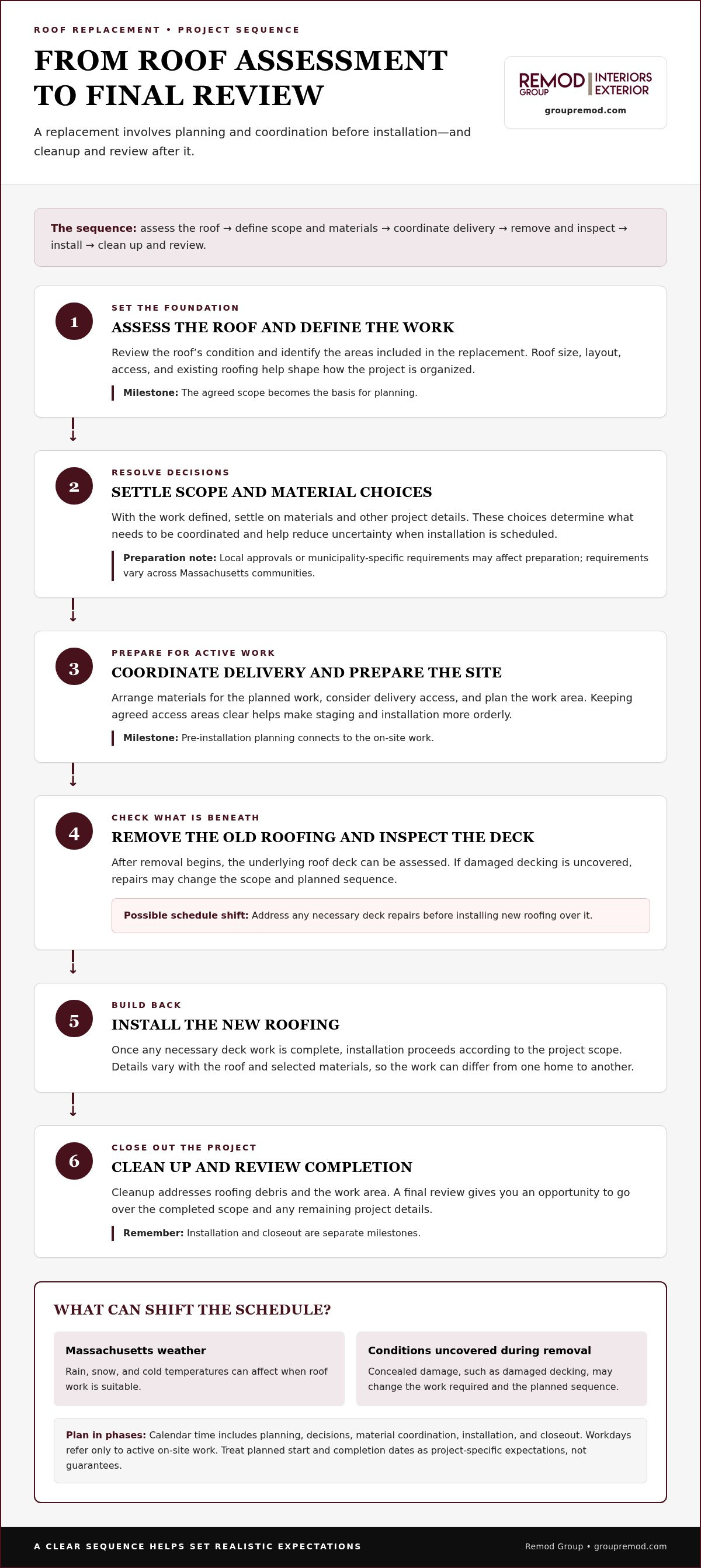
It’s natural to wonder how long your home will be under construction, especially when deliveries, noise, and driveway access affect daily routines. In Massachusetts, rain, snow, cold temperatures, or damage hidden beneath the old roofing can also change the schedule. A clear plan accounts for these possibilities and sets realistic expectations.
This guide explains the roof replacement sequence, from early planning and material delivery to installation and cleanup. You’ll learn what commonly shifts the schedule and how to prepare your home for the work and local weather. With a coordinated plan, you can move through the project with greater confidence.
Table of Contents
Roofing Project Timeline in Massachusetts: What the Overall Schedule Includes
A roofing project timeline covers planning, preparation, material coordination, installation, and closeout, not just the days a crew works on-site. It includes decisions and coordination before installation, as well as any changes caused by weather or conditions uncovered during the work.
That distinction matters. A crew may complete installation in a concentrated stretch, but the project also requires defining the replacement scope, choosing materials, coordinating delivery, preparing the property, and reviewing the finished work. An estimate focused only on installation days leaves out much of the schedule.
What does a roofing project timeline cover?
The schedule starts with planning. The roof’s size, layout, condition, and replacement scope inform material decisions and how the work will be organized. Roof components and styles vary, so understanding the basic structure can help you follow those decisions. For background on roof forms and components, see Roofing Project Basics.
Next comes preparation: materials need to be coordinated, delivery and work areas planned, and the home readied for construction. Installation is the most visible phase, but the project also includes cleanup and a completion review. If removal reveals damaged decking, the scope may need to change before installation continues. The schedule depends on both the agreed work and the conditions uncovered along the way.
Which parts of the schedule can homeowners plan around?
You can make material and scope decisions, arrange access for deliveries, and prepare household spaces before work begins. You can also plan for installation activity by considering driveway access, outdoor belongings, and noise. These steps give you a practical framework, even when exact dates depend on project conditions.
Other tasks depend on weather or what the crew finds. In Massachusetts, rain, snow, and cold can affect when roof work is suitable, while concealed damage may change the work required after removal. Treat a planned start or completion date as a project-specific expectation, not a guarantee. A useful schedule separates planned milestones from work that may shift if conditions change.
Calendar time includes planning, decisions, material coordination, installation, and closeout.
Workdays refer to active on-site work and don’t represent the entire project schedule.
Project conditions, including roof size, scope, materials, access, and weather, shape the sequence and timing.
Thinking in phases gives you a more useful planning framework than focusing on a single crew-day estimate. It also gives you a shared reference for discussing deliveries, household preparation, and schedule changes as the work progresses.
Roof Replacement Stages: From Planning and Delivery to Final Cleanup
A well-organized replacement moves through clear milestones, with key decisions and coordination handled before installation begins. The exact scope can vary: a straightforward replacement may follow a different sequence from a project that needs repairs after the existing roofing is removed.
The typical sequence is assessment, scope and material decisions, delivery preparation, removal and deck review, installation, then cleanup and final review. These stages make the roofing project timeline easier to follow without treating every home or roof as identical.
Assess the roof and define the work. An initial assessment helps establish the roof’s condition, the areas included in the replacement, and the work that may be needed. The agreed scope becomes the basis for planning. Roof size, layout, access, and existing roofing can all affect how the project is organized.
Make scope and material decisions. Once the work is defined, homeowners can settle on materials and other project details. These choices shape what needs to be coordinated and reduce uncertainty when installation is scheduled. Local approvals or municipality-specific requirements may also affect preparation. Requirements vary, so don’t assume the same steps apply in every Massachusetts community.
Coordinate delivery and prepare the site. Materials need to be arranged for the planned work, and delivery access and the work area considered. This milestone connects pre-installation planning to the active work. Keeping agreed access areas clear helps make staging and installation more orderly.
Remove existing roofing and inspect the exposed deck. Once removal begins, the underlying roof deck can be assessed. If damaged decking is uncovered, repairs may change the scope and planned sequence. The condition should be addressed before new roofing is installed over it.
Install the new roofing. After any necessary deck work is complete, installation proceeds according to the project scope. Details vary with the roof and selected materials, so the build-back may differ from one home to another.
Clean up and review completion. Installation and closeout are separate milestones. Cleanup addresses roofing debris and the work area. A final review gives you an opportunity to go over the completed scope and any remaining project details.
For homeowners, it helps to distinguish the installation start date from the full sequence that leads up to it and follows it. A scope change after removal, a delivery adjustment, or a local approval step can affect the order of work. Clear updates help keep expectations aligned as the project moves forward.
Remod Group provides residential roofing as part of its exterior construction and remodeling services. If you’re considering a replacement, explore Remod Group roofing services as you plan the next steps for your home.
What Can Delay a Roofing Project? Weather, Materials, and Hidden Conditions
A planned start date is a guide, not a promise that every stage will proceed without interruption. In Massachusetts, weather, delivery timing, site access, and conditions uncovered during removal can all shift a roofing project timeline. These are possible contingencies, not inevitable setbacks. Knowing what can affect the schedule helps you understand why an adjustment may be needed.
How Massachusetts weather can affect roof work
Rain or snow can make roof surfaces or materials unsuitable for installation. Cold temperatures may affect how some roofing materials are handled or perform, while wind can complicate work at height. The relevant conditions depend on the work and materials, so there isn’t one weather threshold that applies to every project.
New England weather can change quickly. A forecast may affect whether a planned work window remains practical, even when the project is otherwise ready. If conditions make safe, sound installation difficult, shifting the work may be the responsible choice. That can move related tasks, such as delivery or access arrangements, too. Leave some flexibility in household plans rather than assuming every activity will happen on its original date.
Why materials, access, and concealed damage matter
Installation depends on materials reaching the site and the work area being accessible. A delivery change may affect when work can begin. Vehicles, stored belongings, or other obstructions near the home can make staging more difficult. Keeping agreed access areas clear and watching for delivery updates can help avoid preventable delays.
Some conditions only become visible after the existing roofing is removed. If the exposed deck is damaged, the team may need to assess appropriate repairs and adjust the work scope before continuing. This can affect both the sequence and expected duration. It doesn’t mean every roof will reveal a problem; it means the schedule should allow for a considered response if one appears.
Weather: Rain, snow, cold, or wind may affect whether work can proceed safely and properly.
Materials and access: Delivery timing and clear access help keep the planned work window on track.
Concealed conditions: Newly exposed damage may call for a scope adjustment before installation continues.
When circumstances change, a clear update should explain what shifted, why it matters, and which milestone or expectation is affected. A revised plan can help you coordinate driveway use, household routines, and deliveries, even if it can’t remove the underlying contingency.
Build flexibility into your plans where possible, and treat schedule updates as part of a well-managed project. A weather-related pause or repair decision may change the calendar, but understanding the reason and next step makes the disruption easier to manage.
Planning a Roofing Project in MetroWest: Seasonal Timing and Home Preparation
A roofing project is easier to manage when the work window fits the season and your household routine. In MetroWest, weather can shift quickly, and seasonal demand may affect scheduling. There’s no single season that suits every roof: the project scope, current conditions, and forecast all matter. Build flexibility into your plans, then coordinate home preparations around the work window for your project.
Choosing a workable project window in Massachusetts
Each season brings different considerations. Milder, drier stretches can offer favorable working conditions, while rain, snow, cold, or heat may affect whether planned work can proceed. Seasonal demand can also shape scheduling, so discuss timing as part of project planning rather than assuming a particular month guarantees a start date.
For homeowners in Hudson, Natick, and other MetroWest communities, keep an eye on the forecast as the work window approaches and allow for reasonable adjustments. Roof scope and site conditions matter, too. A project involving more extensive work may need different coordination than a straightforward replacement. For broader context on planning residential roof work locally, explore this Massachusetts residential roofing guide.
A homeowner preparation checklist before the crew arrives
Once the work window is established, prepare the property for deliveries, equipment, and activity around the home. The access plan depends on the site and project, so coordinate household arrangements with the planned work rather than assuming every home needs the same setup.
Move vehicles from the driveway or other agreed access areas so deliveries and work activity can be coordinated.
Clear outdoor belongings, including patio furniture, planters, and items near the house that could obstruct access or be exposed to construction activity.
Plan for noise by adjusting calls, naps, or work-from-home schedules where possible. Let household members know when activity is expected.
Make a plan for pets, especially if noise or unfamiliar activity could unsettle them. Choose a comfortable place away from the active work area.
Review household access so everyone knows which entrances or areas may be affected during the project.
These preparations can reduce day-of confusion, but they can’t prevent weather-related changes. Keep the planned work window visible to everyone in the household, and avoid scheduling inflexible plans around the assumption that every task will happen on a precise date. If conditions shift, updated expectations can help you adjust driveway use, pet arrangements, and daily routines.
Remod Group provides roofing services for homeowners in Hudson, Natick, Sudbury, Waltham, Ashland, Hopkinton, Bolton, Northborough, Southborough, Westford, Stow, Maynard, Wayland, Concord, Weston, Wellesley, Sherborn, Acton, Boxborough, Berlin, Shrewsbury, Boylston, Newton, Needham, Dedham, and Dover. Thoughtful timing and preparation make a complex project feel more orderly. To plan residential roofing work around your home and schedule, explore Remod Group roofing services.
What to Expect From a Roofing Contractor During the Project
A clear schedule is more than a start date. It gives you a practical view of key milestones, how deliveries fit into the plan, and how changes will be communicated. That context helps you coordinate household routines and understand what comes next without assuming every roof follows the same path.
Milestones that help homeowners follow the schedule
During planning, you should understand the agreed scope and what needs to be settled before work begins. Material coordination and the planned work window are important checkpoints as the project moves forward. Installation marks the active construction phase, while cleanup and a final review complete the sequence.
Useful schedule updates make each milestone visible. Knowing when the start date is set, when a delivery is expected, and when the completed work will be reviewed helps you plan around driveway access and household activity. If weather or a newly discovered condition changes the plan, an update should explain what changed, why it matters, and which expectation is being revised.
Planning: Clarify the agreed work and remaining decisions.
Coordination: Understand delivery arrangements and the planned work window.
Installation: Know when active work is expected and how schedule changes will be communicated.
Closeout: Review completion and understand any remaining project details.
These are useful checkpoints, not fixed promises about how long each stage will take. A thoughtful roofing project timeline accounts for the work involved and adapts when conditions require a change. As residential re-roofing specialists like SW Roofing & Construction emphasize, proactive communication throughout each phase helps ensure the work stays on track. Homeowners benefit when communication is timely and expectations reflect the actual scope.
How Remod Group fits into a coordinated roofing project
Remod Group provides residential roofing as part of its exterior construction and remodeling services for homeowners in MetroWest and nearby communities. A roof replacement is a coordinated home-improvement project, where planning, installation, and the finished exterior all matter. Clear expectations connect the practical schedule with the improvement you want for your home.
As you plan, consider how the work scope, delivery coordination, and household needs fit together. The Massachusetts residential roofing guide offers broader context for homeowners preparing for roofing work.
A well-structured project keeps the sequence understandable, addresses changes openly, and brings the work to a considered close. To explore residential roofing for your home, visit Remod Group’s roofing services.
Set Your Roof Project Up for a Confident Start
A well-planned roofing project timeline gives you more than dates on a calendar. It creates a shared understanding of what needs to happen before work begins and how decisions will be handled if plans shift. Use that clarity to identify what matters most for your household, from protecting a quiet workday to keeping essential access clear.
The next step is to shape a project plan around your home. Remod Group provides residential roofing as part of its broader exterior construction services for homeowners in MetroWest and nearby communities. With a thoughtful plan in place, you can approach the work with confidence and focus on the lasting improvement ahead.
Explore Remod Group roofing services and take the next step toward a well-coordinated roof project.
Frequently Asked Questions
How long does a roofing project usually take from start to finish?
The full schedule varies by roof, project scope, material coordination, and weather. Active installation is only one part of the roofing project timeline; planning and closeout also take calendar time. For a useful estimate, look for separate expectations for preparation, the on-site work window, and completion review. In Massachusetts communities such as Hudson, Natick, and Sudbury, changing weather can also affect when exterior work proceeds.
Can a roof be replaced during winter in Massachusetts?
Sometimes, but winter conditions can make roof replacement more challenging. Cold temperatures may make some shingles brittle or interfere with proper sealing, while snow and ice can complicate roof access and work conditions. Whether a winter work window is practical depends on the forecast, roof, materials, and project plan. Homeowners in MetroWest should allow for weather flexibility rather than assume a particular winter date will hold.
What happens if the roofing crew finds damaged decking?
If removal exposes damaged decking, the affected area needs to be assessed before new roofing is installed over it. The findings may call for a change to the agreed work. Ask for a clear explanation of what was uncovered, what repair is proposed, and how it affects the project plan. That helps you understand the revised scope and timing before work continues.
Do I need to leave my house during a roof replacement?
Leaving home isn’t automatically required, but expect construction noise and activity around the property. Whether staying home feels practical depends on your household, work schedule, pets, and the site plan. If you remain, choose a comfortable area away from the active work zone, and keep children and pets clear of equipment and material staging. If you plan to be away, keep a way to receive schedule updates.
What should I move or protect before roof work begins?
Move vehicles away from planned delivery and access areas, and relocate patio furniture, planters, and other belongings near the house. Indoors, take fragile items off shelves and walls where construction vibration could disturb them. Keep pets in a calm, separate area, and let household members know which entrances or parts of the property may be affected. Follow the project’s site plan for any additional preparation specific to your home.
Will rain stop a roofing project once installation has started?
Rain can pause roof work if conditions make continuing unsuitable or leave the work area exposed to moisture. The response depends on the stage of the project and conditions at the home. The crew may need to reassess before work resumes, which can affect the next planned activity. Stay attentive to schedule updates and allow flexibility for the work window to shift if the forecast changes.

Comments