
Signs You Need New Siding: A Homeowner’s Checklist

What if one cracked panel is only a cosmetic flaw, but several loose sections point to a bigger problem? For Massachusetts homeowners, the signs you need new siding aren’t always obvious from the curb. Fading may reflect age, while buckling, recurring damage, or moisture clues inside the home can signal a more serious concern behind the exterior.
To decide whether a blemish needs attention or siding replacement deserves consideration, look at the pattern: where the damage appears, whether it is spreading, and whether there are moisture clues around walls or windows. This checklist explains how to spot exterior and interior warning signs, distinguish isolated wear from possible widespread problems, and document what you see. It also offers practical next steps without treating every imperfection as a reason to replace your siding.
Table of Contents
Signs You Need New Siding: What to Look for on the Exterior
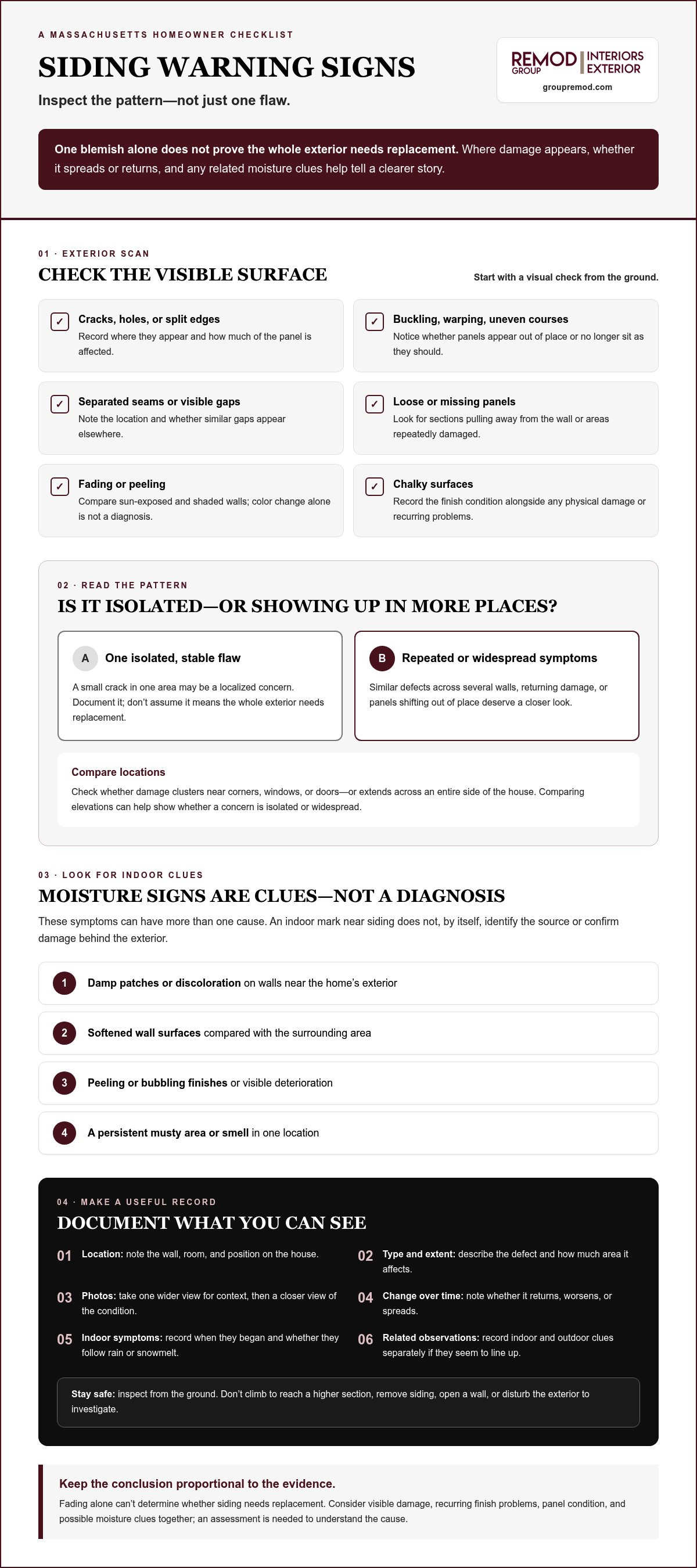
Start with a visual check from the ground. Look for:
Cracks, holes, or split edges
Buckling, warping, or uneven courses
Separated seams or visible gaps
Loose panels pulling away from the wall
Missing pieces or areas that appear repeatedly damaged
Fading, peeling, or chalky surfaces
Record what you find, but don’t treat a single flaw as proof that the whole exterior needs replacement. One small crack may be a localized concern. Similar defects across several walls, or the same damage returning after attention, can point to a broader pattern. Note whether symptoms cluster near corners, windows, or doors, or extend across an entire side of the house. Comparing elevations can help you see whether the problem is isolated or widespread.
Patterns tell a clearer story than a single snapshot. Damage that is spreading, recurring, or accompanied by panels shifting out of place deserves a closer look. Siding materials can expand and contract as temperatures change, so the material and installation affect how movement appears. The general overview of siding and its construction provides useful context, but visible movement should also be considered alongside the condition of surrounding panels.
Cracks, warping, and loose siding panels
Look for separated seams, uneven courses, gaps, and panels that seem to pull away from the wall. Cracks, holes, and missing sections can leave parts of the exterior more exposed to weather. Buckling or warping may mean the siding is no longer sitting as it should. Photograph each location from a safe position on the ground. Check whether similar damage appears elsewhere rather than focusing only on the most noticeable defect.
For a useful record, take one wider photo that shows where the defect is on the house, then a closer photo that captures its shape and extent. Note whether the panel looks newly displaced or whether you have seen the condition before. Don’t climb to reach a higher section or remove siding to investigate. The goal is to document what is visible, not to uncover the cause yourself.
Fading, peeling, and repeated repainting
Color change can affect curb appeal, but it doesn’t automatically mean the siding has failed. Sun-exposed walls may look different from shaded elevations. Note peeling paint or a chalky surface, but don’t treat either as a diagnosis. Pay attention to whether finish problems return after repainting or appear across several areas instead of in one small patch.
Fading alone can’t determine whether siding needs replacement; assess it alongside physical damage, recurring finish problems, and the condition of nearby panels. Together, these details can help distinguish an appearance concern from signs that the siding itself may be deteriorating.
Hidden Water Damage: Siding Warning Signs Inside the Home
Moisture can sometimes show up indoors before its source is clear. A damp patch, softened wall surface, peeling finish, or persistent musty area near an exterior wall is a clue to investigate, not proof that water has passed through the siding. These symptoms can have more than one cause, and a single spot doesn’t establish that damage is hidden behind the exterior.
Pay attention to the details. Note which room and wall are affected, when you first noticed the change, and whether it returns after heavy rain or snowmelt. Compare the indoor location with what you observe outside, but don’t assume the two are connected until the area is assessed.
Interior clues that may accompany siding problems
Look for discoloration or dampness on walls near the home’s exterior, finishes that peel or bubble, and areas that feel softer than the surrounding surface. A musty smell that persists in one location is also worth recording. Don’t assume these signs mean mold, rot, or siding failure. Treat them as reasons to gather details and look for a pattern.
Take a dated photo and write down what was happening around the time the symptom appeared. Did it follow rain, melting snow, or a period of dry weather? Has it faded, worsened, or returned? This record can clarify when the symptom occurs and whether it recurs, without requiring you to open a wall or disturb the siding.
What soft spots and blistering can and cannot tell you
Blistering, soft finishes, or visible deterioration deserve attention, particularly if the affected area is growing or appears alongside an exterior concern. Still, appearance alone can’t reveal where moisture originated or what lies beneath the surface. Water may enter through more than one part of an exterior, including areas around windows, doors, roof edges, or siding. An interior mark near the siding doesn’t automatically identify the source.
An indoor moisture clue is a reason to investigate, not confirmation of damage behind the siding. A careful assessment considers the affected interior area alongside exterior details. For vinyl siding, the Vinyl Siding Institute offers information about the material, installation, and maintenance. Knowing the siding type can provide useful context, but it cannot diagnose a specific moisture concern.
Keep your notes factual: describe what you see, where it appears, and whether it recurs. If an indoor symptom and exterior damage seem to line up, record both rather than deciding the cause yourself. The Massachusetts siding installation homeowner guide offers broader context for planning exterior work. When concerns point to a wider siding issue, Remod Group’s siding installation services can help you plan the next step for your home’s exterior.
When Siding Damage Suggests Replacement Rather Than a Spot Repair
A repair-versus-replacement decision depends on the pattern, not simply the most noticeable flaw. One stable defect may be limited. Damage that repeats, spreads across elevations, or appears alongside other concerns can point to a broader issue worth evaluating. Neither pattern proves the right solution on its own. The siding material and condition, extent of damage, and wall system beneath it all matter.
Use this comparison as a guide, not a diagnosis. Limited damage may merit a repair assessment, while recurring or widespread signs can justify evaluating replacement. An assessment should look beyond the visible face of the siding: the condition of surrounding sections and the wall system can help determine an appropriate response.
Patterns that make a closer assessment more important
Several symptoms together deserve more attention than one isolated mark. Loose panels on one side combined with recurring cracks elsewhere, for example, tell a different story from one damaged section. If symptoms appear on multiple elevations, record each location and whether the same type of deterioration is present. Note previous repairs, when they were made, and whether the problem returned. A pattern that persists after attention can inform the next decision, but it doesn’t automatically mean full replacement is necessary.
Why age or one cosmetic flaw is not enough
Age is one consideration, not a verdict. Siding materials differ, and maintenance, installation history, and visible performance all affect how condition should be judged. Discoloration may change a home’s appearance without showing that the siding has lost its function. Older siding may still warrant attention based on its actual condition. Don’t choose replacement based on age or fading alone. Compare material-specific considerations in this New England siding material comparison as you weigh what you’re seeing.
The signs you need new siding are most persuasive when they form a consistent picture: repeated damage, visible deterioration across more than one area, or related concerns that call for a closer look. A measured assessment can help distinguish a localized issue from a broader project, so the next step reflects the home’s documented condition rather than one alarming symptom.
A Massachusetts Homeowner Checklist for Inspecting Siding Damage
A useful inspection doesn’t require special tools or close contact with the siding. Walk around the home from the ground, look for changes you can see safely, and build a clear record. Don’t climb a ladder or remove panels. The aim is to observe, compare, and note what may need a closer assessment, not to diagnose the cause yourself.
A simple walk-around inspection and photo record
Use the same route each time so you can compare observations. Check each visible wall, including corners and areas around windows and doors. Look for cracks, gaps, loose or displaced sections, and changes in color or finish. Note where symptoms cluster, but don’t assume their location identifies the cause.
Keep a simple record as you go:
Mark the location. Note the side of the house and approximate position, such as below a window or near a corner.
Describe the symptom. Record whether you see a crack, gap, loose section, discoloration, or another visible change.
Estimate its extent. Note whether it affects one small area or several adjoining sections.
Take comparison photos. Photograph each concern from a consistent distance, then include a closer view if you can take it from the ground.
Record the date and conditions. Note recent rain, snow, or snowmelt, and whether you’ve observed the same issue before.
In New England, rain, snow, and freeze-thaw conditions provide useful context when tracking exterior changes. A symptom that appears or worsens after changing weather is worth noting, though timing alone doesn’t establish its cause. Revisit the same areas during later ground-level checks and record whether the condition stays stable, returns, or spreads.
If your notes raise questions about a pattern, discuss your siding concerns with Remod Group.
When observations call for a professional assessment
A closer assessment makes sense when damage appears across multiple areas, keeps returning, or includes panels that have shifted out of place. Indoor moisture clues alongside visible exterior changes also deserve attention. Share your notes and photos so the siding’s condition and any potentially related exterior components can be considered. Visible symptoms are useful evidence, not a conclusion about what needs repair or replacement.
If you’re exploring fiber cement siding specifically, the James Hardie siding project guide for Massachusetts provides material-focused context. For any siding concern, keep your inspection record factual: what changed, where it appeared, and whether it recurred. Clear documentation makes it easier to discuss the next step.
Planning Your Next Step When Siding May Need Replacement
Spotting a warning sign is the beginning of the decision, not the decision itself. A crack, faded area, or patch of indoor dampness doesn’t automatically mean the entire exterior needs to be replaced. Start by reviewing the pattern you documented, identifying the areas affected, and considering whether the siding or another part of the exterior may be involved.
For Massachusetts homeowners, organized observations make it easier to discuss the home’s condition. Bring your photos and notes, including where symptoms appeared, whether they returned, and what weather conditions surrounded the change. This puts a single concerning detail in context with the home’s overall exterior condition.
What an exterior siding assessment should clarify
An assessment should begin with the affected areas and the pattern of symptoms before project scope is discussed. The condition and extent of visible siding damage matter, as do any moisture clues you’ve observed indoors. If a concern is near a roof edge, window, or door, those adjacent components may also be relevant. Their presence doesn’t establish the source; it helps identify which areas to consider.
A useful discussion separates what’s visible from what still needs evaluation. It can help clarify whether the concern appears localized or broader and whether siding replacement should be considered. The appropriate scope, material, schedule, and outcome depend on the home and should not be assumed before its conditions are considered.
From warning signs to a considered replacement plan
Clear documentation helps keep planning grounded. A photo of one isolated defect gives different context from a record of recurring changes across several areas. Share what you’ve noticed and what remains uncertain. This can support a focused discussion about the home’s exterior needs instead of treating every blemish as a reason for a full project.
If the documented condition points toward replacement, Remod Group provides siding installation as part of its exterior remodeling services. Material selection can follow a review of the project’s needs; homeowners comparing options can consult a material guide as a separate step. Start by understanding the condition, then plan work that responds to it.
Ready to discuss your home’s siding concerns and possible replacement? Plan your siding project with Remod Group.
Turn Your Siding Concerns Into a Clear Next Step
You don’t have to decide on a full replacement based on a quick glance. Use your observations to start a measured conversation about what your home needs now and what may be worth planning for later. The goal isn’t simply a refreshed exterior; it’s a project shaped around your home’s condition and your priorities.
Remod Group provides siding installation for homeowners in Hudson, Natick, Sudbury, Waltham, Ashland, Hopkinton, Bolton, Northborough, Southborough, Westford, Stow, Maynard, Wayland, Concord, Weston, Wellesley, Sherborn, Acton, Boxborough, Berlin, Shrewsbury, Boylston, Newton, Needham, Dedham, and Dover. If replacement appears to be the right direction, a focused discussion can help move from uncertainty about the signs you need new siding to a considered plan for your exterior.
Discuss your siding project with Remod Group and take the next step with confidence.
Frequently Asked Questions
Can one cracked siding panel mean I need new siding?
Not by itself. One cracked panel can be a localized defect, especially if nearby sections remain aligned and there are no related concerns. The decision depends on how much siding is affected, whether the crack returns or spreads, and whether other panels or interior areas show changes. Photograph it with a wider view for context. An assessment can help determine whether attention to that section is reasonable or broader work deserves consideration.
Is fading siding a sign that it needs to be replaced?
Fading is an appearance change, not proof that the siding material has failed. Look at the surface as well as its color: peeling, brittleness, cracking, or other physical damage may add important context. A sun-faded wall with intact panels presents a different picture from fading combined with sections that are splitting or coming loose. Consider the full condition before treating color change alone as a reason for replacement.
Can water get behind siding without visible exterior damage?
Yes. Some moisture pathways may be difficult to spot from the ground, particularly around transitions or openings in the exterior. A wall can appear intact while water enters elsewhere, such as near a roof edge, window, or door. That possibility is a reason to record indoor changes and relevant exterior details, not proof that hidden damage exists. A closer assessment can help clarify whether moisture is present and what may be contributing to it.
What happens if water gets behind siding?
Repeated or prolonged moisture can affect nearby building materials, potentially causing finishes to soften or underlying materials to deteriorate. The outcome depends on the amount of water, how long the area stays damp, and the materials involved. A small leak doesn’t automatically mean rot or mold has developed. If you notice a persistent damp area or a change in a wall surface, document it and have the affected area assessed rather than assuming the extent of damage.
How can I tell whether siding damage can be repaired?
Limited damage in one stable area may be suitable for a repair assessment, while recurring symptoms or concerns across several sections may call for a broader evaluation. Consider whether similar damage has returned after past work and whether nearby areas are also changing. An assessment can review the visible condition and surrounding exterior before determining an appropriate scope. Avoid deciding on full replacement based only on one damaged panel or a single cosmetic flaw.
Do higher energy bills mean my siding needs replacement?
Higher bills have many possible causes, including changes in energy use, heating or cooling equipment, insulation, and air leakage around openings. A draft or comfort change near an exterior wall may be a useful clue, but it doesn’t establish that the siding is responsible. Note which rooms feel different and whether the change is persistent. Compare those observations with visible exterior concerns before treating energy costs as one of the signs you need new siding.
Should I inspect my siding after a Massachusetts winter?
A ground-level check after winter is a practical way to notice changes, though it can’t guarantee that problems will be prevented or reveal hidden conditions. Look for newly visible cracks, loose panels, gaps, or damp areas, especially after snowmelt. Don’t climb a ladder or pull siding away to investigate. Record what you see and where it appears, then compare your notes with earlier observations to identify changes that may warrant closer attention.


Comments