
When to Replace Your Roof in Massachusetts: A Homeowner’s Checklist

What if the most noticeable roof problem isn’t the one that matters most? A single leak may call for a targeted repair, while wear across several areas can point to a broader issue. For homeowners asking “when to replace your roof Massachusetts,” the answer depends on accumulated evidence, not one stain or one harsh winter.
It’s understandable to feel uncertain. Snow, ice, wind, and repeated freeze-thaw conditions can put pressure on an aging roof, but visible damage alone can’t confirm that replacement is necessary. A careful assessment helps distinguish an isolated repair from roof-wide deterioration.
This checklist explains warning signs to document, how to weigh a repair against a replacement evaluation, and what details to gather before planning a project. You’ll also learn how a professional roofing assessment can clarify next steps, so you can make a decision based on your Massachusetts home’s needs.
Table of Contents
Roof Replacement Warning Signs in Massachusetts
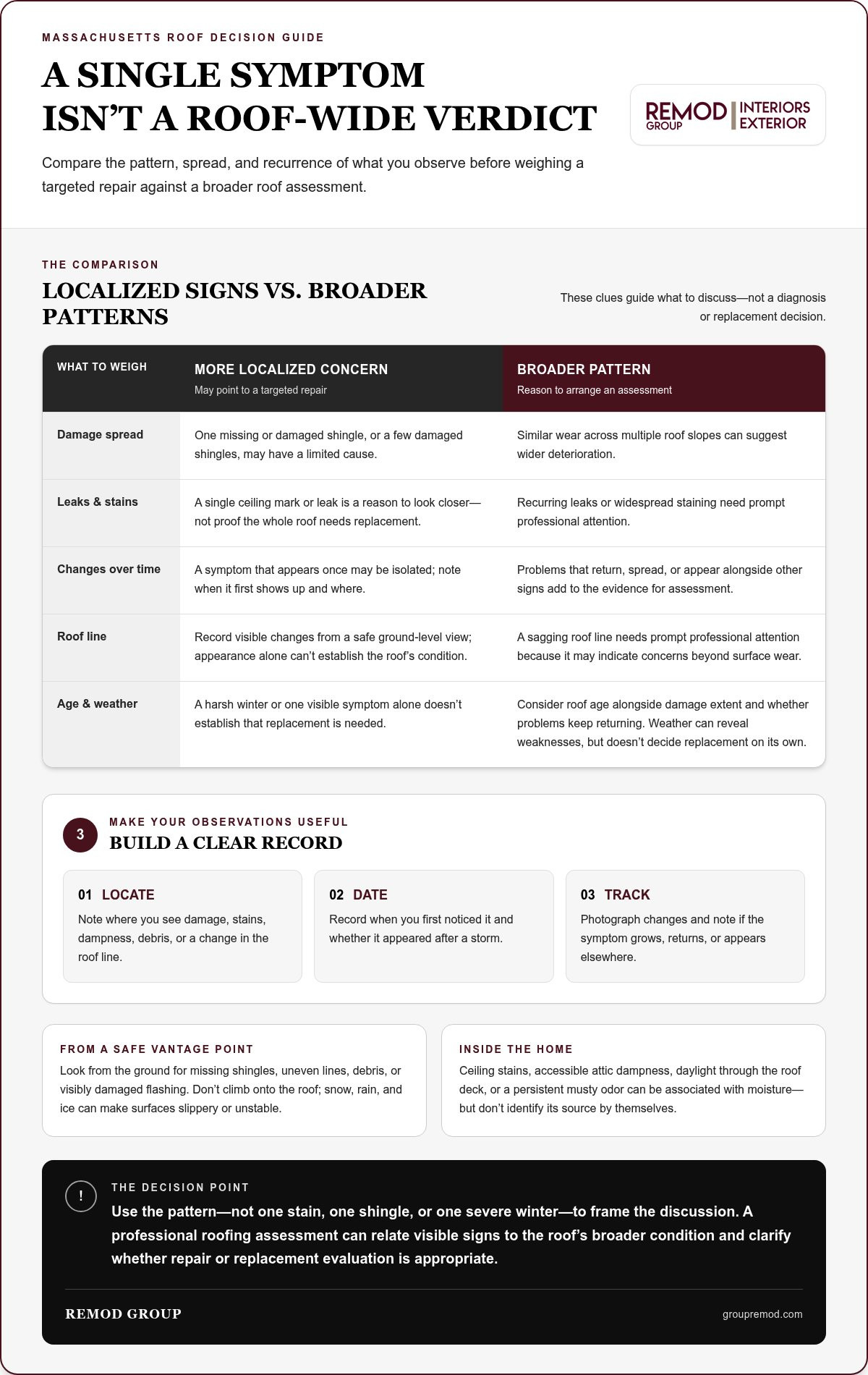
A concerning symptom is a reason to look closer, not proof that the entire roof needs replacement. One missing shingle or a single ceiling mark may have a limited cause. Look at the pattern: how many areas show wear, whether symptoms return, and whether moisture or visible damage is spreading. The question “when to replace your roof Massachusetts” homeowners face is best answered through a full assessment, not appearance alone.
Document missing, cracked, curled, or visibly deteriorated shingles. A few damaged shingles may point to a localized problem; similar wear across multiple roof slopes can suggest broader deterioration. Recurring leaks, widespread staining, or a sagging roof line need prompt professional attention because they may indicate concerns beyond surface wear. Several warning signs across the roof or inside the home together are a good reason to arrange an assessment.
A roof works as a system, with layers and components that protect the home and direct water away. Understanding the components and functions of a roof can help explain why a visible shingle problem may not reveal the condition of the layers beneath it.
What can you safely observe from the ground?
From a safe location, look for missing shingles, uneven roof lines, debris, and flashing that appears bent, loose, or visibly damaged around chimneys or other roof openings. Don’t climb onto the roof to get a closer view. Surfaces can be slippery or unstable, especially after Massachusetts snow, rain, or ice. A ground-level view can flag concerns, but it can’t establish the roof’s full condition.
Record what you see without trying to diagnose it. Note the location, date, and any change since an earlier observation. For example, record whether a missing-shingle area appeared after a storm or whether a roof line looks different from another angle. Consistent notes make it easier to describe patterns during an assessment.
Which interior signs may point to roof trouble?
Inside, look for ceiling stains, damp areas in an accessible attic, daylight visible through the roof deck, or a persistent musty odor. These signs can be associated with moisture, but they don’t identify its source on their own. Leaks and dampness can have multiple causes, so a careful assessment is needed before deciding whether the roof requires repair or replacement.
Photograph and note a stain when it first appears, grows, or changes after a storm. If you can safely view the attic, record where dampness or daylight appears rather than disturbing materials or walking on uncertain surfaces. A dated record can help show whether a symptom is isolated or recurring.
Document: Note visible shingle damage, flashing concerns, debris, and uneven lines.
Track: Photograph indoor marks and record their location, date, and changes over time.
Escalate: Seek prompt professional attention for recurring leaks, widespread staining, or sagging.
These observations are useful evidence, not a diagnosis. A professional roofing assessment can relate what’s visible to the roof’s broader condition and help clarify the next step.
How Massachusetts weather can reveal roof wear over time
Massachusetts weather can bring an existing roof weakness to light. Snow adds weight, ice can hold moisture at vulnerable edges, wind can lift or displace shingles, and rain can expose areas that aren’t shedding water as they should. Repeated freezing and thawing can also stress materials and joints. These conditions may reveal a developing problem, but one severe winter doesn’t automatically mean the roof needs replacement.
Weather can reveal vulnerabilities, but it can’t determine the replacement decision on its own. What matters is what the weather exposed, how extensive the damage is, and whether signs keep returning. If you’re researching “when to replace your roof Massachusetts,” treat storm-related changes as evidence to record, not as a diagnosis.
Snow, ice, and signs of moisture intrusion
After snow or ice, note any new interior staining or leaks and whether the same area becomes damp again during later weather. A stain that appears after a storm deserves attention, but it doesn’t identify the source by itself. Water can travel before it shows indoors, so the visible mark may not be directly below the point where moisture entered.
An ice dam is a ridge of ice that forms near a roof’s edge and can prevent melting snow from draining freely. Water may collect behind the ridge and find a path beneath roofing materials. An ice dam is a reason to assess the roof and related conditions, not a standalone verdict that the roof has failed or must be replaced. Note where ice builds up and whether it coincides with recurring leaks or stains.
Wind and storm damage across Massachusetts
After strong winds or severe storms, look for visible changes from a safe vantage point and record when you noticed them. Missing or displaced shingles, debris, or a newly apparent change along a roof edge can help describe what happened. Don’t climb onto a wet, icy, or storm-damaged roof to investigate.
Storm damage may be limited to one area or affect multiple roof sections. Those situations can call for different solutions, which is why the extent and distribution of damage matter as much as the weather event itself. Compare new observations with earlier photographs or notes, and record any interior symptoms that appear afterward.
Keep the sequence clear: note the weather event, the first date you observed a change, its location, and whether it recurs. That timeline can help a professional distinguish a localized issue from broader wear without treating one storm as the whole story. If weather-related signs appear across the roof or inside the home, an assessment can clarify the next step. Remod Group provides residential roofing services in Massachusetts for roofing projects.
Roof repair or replacement? Weigh age, damage, and repeat problems
A repair-versus-replacement decision depends on more than the most visible defect. Damage in one small area may be limited, while similar symptoms across several roof sections can point to broader wear. The roof’s age and maintenance history add context, but neither settles the decision alone. For homeowners searching “when to replace your roof Massachusetts,” the key is to weigh the full pattern of evidence.
Use this comparison to prepare for an assessment. These clues aren’t a diagnosis; the condition of the surrounding roofing materials and any underlying concerns can change the appropriate project scope.
When a repair assessment may be appropriate
If damage appears confined to one section, a repair assessment can help determine whether a limited solution is suitable. For example, a small area of damaged roofing with no known history of recurring leaks may call for a closer look at that section first. The visible spot is only part of the picture, though. If nearby materials are also worn or affected, the recommended scope may need to extend beyond the apparent damage.
When broader replacement evaluation makes sense
Multiple symptoms, recurring leaks, or deterioration across different roof areas call for a fuller assessment. Roof age adds useful context, especially alongside records of previous repairs, maintenance, and leaks. Still, age alone doesn’t prove replacement is necessary, just as a newer roof isn’t automatically free of problems. The appropriate scope depends on the roof’s observed condition and the extent of any underlying concerns.
Look for patterns rather than a single deciding clue. A recurring leak in one location may call for a different scope than leaks in separate areas; widespread wear may carry more weight than age by itself. Bring dates, repair notes, and photographs to the assessment so the roof’s history can be considered alongside its current condition.
For more context on planning and evaluating a roofing project, consult this Massachusetts residential roofing guide. A professional assessment can help distinguish a targeted repair from broader replacement needs and clarify the project scope without treating any single clue as a verdict.
A Massachusetts roof inspection checklist: what to document and when
A clear record turns scattered observations into useful context for a roofing assessment. Note where a symptom appears, when you first noticed it, and whether it changes or returns. This information can help clarify whether a concern is isolated or part of a larger pattern, without requiring you to diagnose the roof yourself.
What to record before an assessment
Keep your notes in one place, such as a dated document or folder of photographs. Take pictures only from safe, accessible areas at ground level. Don’t climb onto the roof to gather evidence; a photo from a distance and a precise description are safer and still useful.
Describe exterior changes. Record visible damage, debris, or changes in the roof line, and identify the roof section as clearly as you can.
Note interior signs. Describe ceiling stains, damp areas, or other changes, including the room and approximate location.
Track leak timing. Write down when a leak or stain first appeared and whether it returns or grows.
Record weather context. Note whether you noticed a change after rain, snow, ice, or strong wind.
Mark the pattern. Identify whether each symptom is new, recurring, or spreading compared with earlier observations.
Gather the roof’s history. Collect relevant maintenance records and note prior repairs, previous leaks, and when those issues occurred.
Even a brief timeline can help. For example, note that a ceiling mark appeared after a rainstorm, then record whether it stayed the same or changed during later weather. Don’t assume that timing alone identifies the cause; the record gives an assessor a clearer starting point.
How to think about timing in New England
Roof work depends on weather, site conditions, and project planning, so a preferred season can’t determine a suitable start date on its own. Document active leaks promptly rather than waiting for a particular time of year. If moisture is appearing indoors, record the location and changes as soon as you notice them, then arrange an assessment to understand the concern and possible next steps.
For planning context, the roofing project timeline guide can help you understand the stages involved without assuming a fixed schedule. Timing depends on the specific project and conditions at the home.
Your checklist is a practical record, not a substitute for a professional assessment. If your notes show recurring symptoms or multiple areas of concern, schedule a roofing assessment with Remod Group to discuss your Massachusetts home’s roofing needs.
What to Do if Your Massachusetts Roof Needs Replacement
Your checklist is a starting point, not a verdict. Use it to organize what you’ve observed and explain the roof’s history, then have the condition assessed before deciding whether replacement is appropriate. A stain, a missing shingle, or a difficult winter can raise questions, but none alone establishes the condition of the entire roofing system.
If you’re still weighing when to replace your roof Massachusetts, consider the evidence together: where visible damage appears, whether interior symptoms recur, and how the roof’s current condition fits with its maintenance history. A professional assessment can connect those details and help clarify whether repair or replacement merits consideration.
What a professional assessment can help clarify
An assessment considers visible roof conditions alongside the symptoms you’ve reported inside the home. Your photographs and notes can help explain when an issue appeared, where it occurs, and whether it has changed. The assessment may also identify concerns that aren’t apparent from the ground or from a ceiling mark alone.
Those findings can inform the project scope. A limited concern with surrounding materials in sound condition may lead to a different discussion than recurring leaks or wear across multiple areas. An assessment doesn’t guarantee a particular diagnosis or outcome, but it provides a more informed basis for deciding what work to consider.
Plan the next step with a clear record
Bring your observations, photographs, and relevant maintenance history together. You don’t need to arrive with a replacement decision already made. A clear record makes it easier to discuss what the evidence suggests and what remains uncertain.
Use your record to guide a focused conversation around questions such as:
Do the visible concerns appear limited to one area or extend across the roof?
How do reported leaks or interior symptoms relate to the visible condition?
Does the roof’s history of repairs or recurring problems affect the scope to consider?
What findings support discussing repair, replacement, or further evaluation?
Clear answers depend on the roof’s observed condition, not a checklist alone. Remod Group provides residential roofing services in Massachusetts, including roofing projects informed by a professional assessment. The company serves homeowners in Hudson, Natick, Sudbury, Waltham, Ashland, Hopkinton, Bolton, Northborough, Southborough, Westford, Stow, Maynard, Wayland, Concord, Weston, Wellesley, Sherborn, Acton, Boxborough, Berlin, Shrewsbury, Boylston, Newton, Needham, Dedham, and Dover. A documented, considered decision is more reliable than guessing from one symptom and gives you a clearer foundation for planning work that suits your home.
Take the Next Step with Confidence
A roofing decision doesn’t have to begin with certainty. It can begin with a clear account of what you’ve noticed and a professional conversation about what those signs may mean. If you’re weighing when to replace your roof Massachusetts weather is relevant, but your home’s specific roof condition should guide the decision.
Bring your observations and maintenance history into the next discussion. A grounded assessment can help turn uncertainty into a practical plan, whether replacement merits consideration now or another path is more appropriate. Remod Group’s residential roofing work is part of its broader exterior construction and home improvement services in Massachusetts.
Explore Remod Group’s residential roofing services and take a considered next step for your home. A clearer understanding of the roof’s condition helps you plan work that suits your home.
Frequently Asked Questions
How old should a roof be before you consider replacing it in Massachusetts?
Architectural asphalt shingles typically last an estimated 25 to 30 years in Massachusetts, but that range isn’t a replacement deadline. The roof’s condition, past maintenance, and repair history matter too. If yours is approaching that age, use it as a reason to plan an assessment rather than assume replacement is necessary. Homeowners in Hudson, Natick, and nearby communities can consider roof age as one part of a broader review.
Can one leak mean the whole roof needs to be replaced?
Usually, one leak alone isn’t enough to conclude that the whole roof needs replacement. The source might be limited to one area, or water could be entering elsewhere and traveling before it becomes visible indoors. Note when the leak occurs and where the stain appears, then have the roof and relevant interior area assessed. The scope depends on what the evaluation finds, not just the size of the ceiling mark.
Is a roof replacement necessary after an ice dam?
No, an ice dam doesn’t automatically mean the roof needs replacement. It can be a sign to investigate, especially if water entered the home or damage is visible afterward. Once conditions allow a safe assessment, document any interior changes and have the affected area evaluated. If a leak is active, don’t wait for the next winter to record it. The decision depends on the roof’s condition and the extent of any damage.
What happens if you wait to replace a roof with recurring leaks?
Recurring leaks can let moisture continue reaching ceiling materials, insulation, or other parts of the home, potentially increasing the scope of needed work. The impact depends on where water is entering, how often it happens, and how long materials remain damp. If a leak returns, record each occurrence and arrange an assessment rather than assuming a previous repair addressed every concern. Prompt attention can help clarify the problem before planning further work.
Can you replace a roof during a Massachusetts winter?
Sometimes, but winter work depends on weather, site conditions, roof condition, and project planning. Snow, ice, or other conditions may affect whether work can proceed safely and how materials can be installed. A calendar date alone can’t determine feasibility. If replacement is under consideration during colder months, share any active leaks or damage promptly so the assessment and project plan can account for the home’s needs and current conditions.
Does homeowners insurance cover roof replacement in Massachusetts?
Coverage depends on your specific policy, the cause of the damage, and any applicable exclusions or deductibles. A sudden event may be treated differently from deterioration over time, but policy language governs your situation. Review your documents and report potential damage to your insurer for guidance on the claim process. Keep dated photos, repair records, and notes about when the problem appeared to support a clear account of what happened.


Comments